
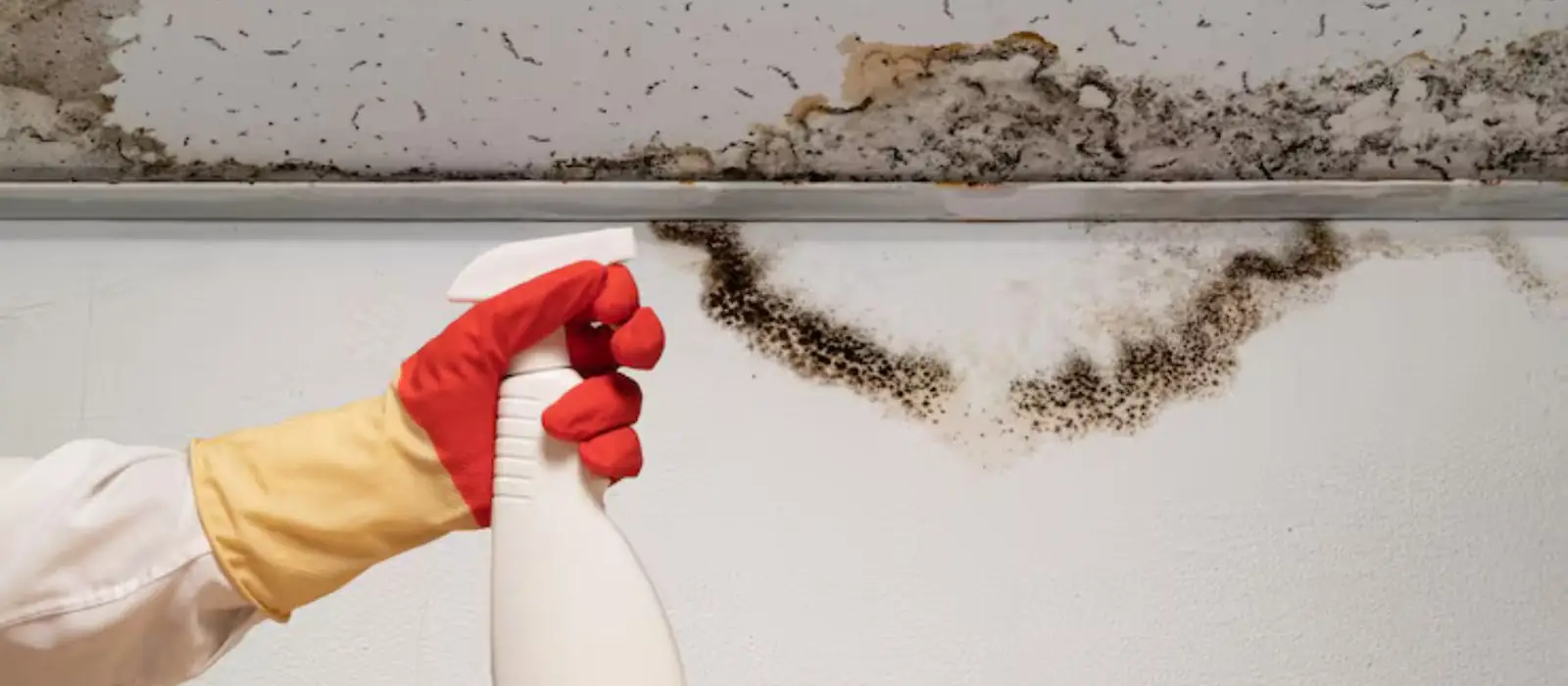
A dark patch on the bathroom ceiling is one of the most common reasons a homeowner in Coppell, TX searches for black mold on a bathroom ceiling. Most people want a single answer, and the question they type is whether it is dangerous.
Health questions belong to a physician, and nothing on this page replaces that conversation. What a restoration company can answer is the building side: where the moisture is coming from, how far the growth reaches, and what a proper cleanup looks like under the published ANSI/IICRC S520 standard for mold remediation.
What the dark patch usually looks like
Growth on a painted ceiling tends to show up as speckled or smudged spots in gray, brown, olive or black. It often starts in a corner, along the edge above the shower, or around the exhaust fan housing, because those are the spots that stay damp longest.
The color alone tells you very little. Plenty of mold that people call black mold is simply dark, and plenty of dark stains turn out to be dirt, soot from candles or old water staining with no active growth at all. Only an assessment with a moisture meter and a close look at the surface can sort those apart.
Mold, mildew and soap film are not the same thing
Before anyone scrubs, it helps to know what is probably on the paint. The table below lists the three usual suspects and a simple observation for each.
| Mark | What it looks like | What it suggests |
|---|---|---|
| Soap and mineral film | Dull, uniform haze, often streaked, wipes off with a damp cloth | Steam and splash residue, no active growth required |
| Mildew | Flat gray or white powdery patches on the paint surface | Surface moisture, usually from steam and weak ventilation |
| Mold growth | Spotted or fuzzy dark clusters that return soon after cleaning | A damp surface or damp material behind it that is not drying out |
| Old water stain | Brown ring or tea-colored blotch with a clean edge | A past leak, possibly dry now, possibly still feeding from above |
A stain that keeps coming back in the same footprint after cleaning is the one to take seriously, because it points to moisture that is still arriving.
Why bathroom ceilings grow mold in the first place
A hot shower pushes a lot of water vapor into a small room. That vapor rises, meets the coolest surface in the room, and condenses. In most bathrooms the ceiling is the coolest surface, especially under an attic with a cold roof deck in winter.
An exhaust fan that is undersized, clogged with lint, ducted into the attic instead of outdoors or simply never switched on leaves that vapor with nowhere to go. Paint and drywall paper then stay damp for hours after every shower, and organic material that stays damp for long enough grows mold.
When the moisture is coming from above
Not every ceiling problem starts with a shower. A slow roof leak, a failed plumbing vent boot, a loose ductwork joint dripping condensation or a supply line in an upstairs bathroom can all wet the back of the ceiling drywall while the front looks fine until the stain breaks through.
A useful test is timing. If the dark patch grows after rain, after the air conditioner runs for a long stretch or after someone uses the bathroom above, the source is not the shower below. Cleaning the surface in that case treats the symptom and leaves the wet drywall in place.
Once the source is fixed, the damaged ceiling material still has to be dried or removed and then rebuilt. That second stage is covered on the water damage repair page, and it should only start after moisture readings confirm the structure is dry.
What a physician can answer and what a restoration crew can answer
People who ask whether black mold is dangerous are really asking two questions. The first is about their own body and their family, and that one goes to a physician who knows their history. We do not diagnose anything and we do not make health claims about mold.
The second question is about the building: is there active growth, how big is the affected area, is the material wet, and what has to be removed. Those are measurable, and a crew with moisture meters and a written scope can answer them.
When to have the ceiling assessed
- The marks return within weeks of being cleaned.
- The patch is larger than a hand span or has spread to a wall.
- The paint is bubbling, the drywall feels soft or the ceiling sags.
- There is a musty smell with no visible source.
- A leak above the room was never properly repaired.
- You are buying, selling or refinancing and a lender or inspector flagged the area.
Any one of those is enough reason to ask for an inspection. If the answer turns out to be minor surface mildew, you will have lost a short visit. If it is wet drywall, you will have caught it before the framing is involved.
What S520 practice looks like on a job
ANSI/IICRC S520 is the published industry standard for mold remediation, and homeowners can ask any company whether its crews work to it. Our mold remediation page lays out the same steps for a Coppell home. In plain terms, the process starts by finding and stopping the moisture, because removing mold from a wet surface is wasted effort.
From there the work area is contained with plastic sheeting so spores are not tracked through the house, air scrubbers with HEPA filtration run to capture airborne particles, and affected porous material such as ceiling drywall is cut out and bagged. Nonporous surfaces are cleaned, the area is dried to its target moisture level, and a final check confirms the work is complete.

What to do while you wait for an assessment
Run the exhaust fan during and for at least twenty minutes after each shower, and leave the bathroom door open to let the room equalize. Do not paint over the spots, because paint seals in the moisture and hides the evidence an inspector needs.
Skip spraying or scrubbing the ceiling directly. Disturbing a mold colony can spread it across the room, and mixing cleaning chemicals in a closed bathroom creates a separate hazard. Take clear photos with a ruler in frame instead, so the size and location are on record.
Want someone to look at it?
Describe the ceiling and what changed, and dispatch will explain what an assessment covers for your situation.
Coppell notes on ceiling mold and insurance
Texas Department of Insurance guidance says to confirm a mold professional holds a state license, to expect an inspection showing the mold was removed and the cause was fixed, and to receive a certificate that the mold was removed. Ask for that paperwork up front, because a lender or a buyer in Coppell may ask for it later.
The same guidance notes that mold cleanup and testing are typically excluded from home policies unless that coverage was added, so ask your agent before you schedule work. If the cause was a sudden, covered leak, the conversation changes, which is another reason to document the ceiling before anything is touched.
About 29.9 percent of Coppell housing units were renter-occupied in the 2020 Census. If you rent, report a ceiling stain to the landlord in writing the same day you see it, since the building owner controls the roof and the plumbing above you.
Frequently asked questions
Is black mold on a bathroom ceiling dangerous?
That is a question for a physician, and we do not make health claims. What we can tell you is whether the material is wet, how large the growth is and what removal involves.
Can I just bleach it and repaint?
Surface cleaning can lighten a stain, but it does not dry out wet drywall behind it. If the moisture source is still active, the spots tend to return, so the better order is to find the source first.
Does a Coppell bathroom ceiling need testing before removal?
Not always. A visual inspection and moisture readings often settle the scope. Testing is sometimes requested for a sale, a loan or an insurance question, and it is typically a separate paid step that many policies exclude.
How do I know if the leak is coming from my roof or my shower?
Watch the timing. Growth that worsens after rain or long air conditioner cycles points to the attic side, while growth that appears after showers points to ventilation. Our crew checks with a moisture meter and, when needed, a thermal camera.
Which towns near Coppell do you cover for bathroom mold calls?
Dispatch covers Coppell and nearby areas including Carrollton and Irving, and the same assessment steps apply in each.