
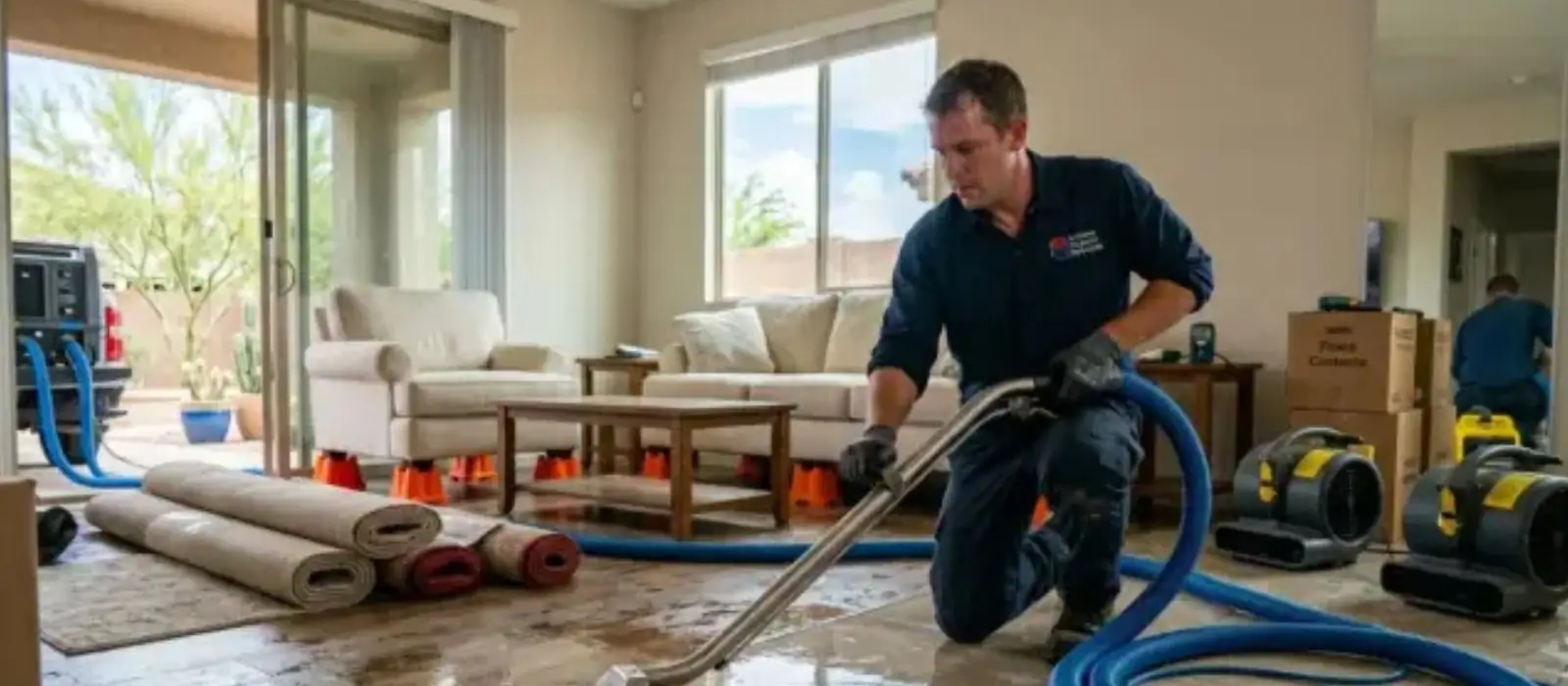
Emergency water removal in Coppell, TX starts with getting the standing water out of the building as quickly as the equipment allows. Our dispatch line is open 24/7, so a pipe that lets go at two in the morning gets the same attention as one that fails on a Tuesday afternoon.
Before the crew arrives, stop the source if you can reach the shutoff, keep people and pets out of the water, and do not use a household vacuum on it. If the water is touching outlets, cords or the electrical panel, leave the room and call 911 or your utility first.
When standing water is an emergency
Water that is more than a puddle deserves a fast response. An inch of water across a 400 square foot room is about 250 gallons, and carpet pad, baseboard and the bottom of the drywall start absorbing it right away. Every hour it stays, the water climbs the wall by wicking and heads for the subfloor.
It is also an emergency when the water came from a toilet, a sewer backup or a dishwasher drain, because those sources are not clean. In that case the goal is to get it out and keep it out of living space while the crew sets up containment.
How water extraction works
Crews use submersible pumps for deep water and truck-mounted or portable extraction units for water in carpet, pad and hard floors. Wands and weighted tools pull water out of carpet fibers, and the pad is usually removed because it holds water like a sponge and is cheap to replace.
After extraction the structure is still wet. Moisture meters show what the surface hides, and drying equipment takes over. That handoff is why removal is rarely a stand-alone job and why a crew that stops after pumping leaves the hardest part undone.
| Tool | What it does | Where it is used |
|---|---|---|
| Submersible pump | Moves deep standing water | Flooded rooms, garages, utility rooms |
| Truck-mounted extractor | Strong suction for soaked carpet | Large wet floor areas |
| Portable extractor | Targeted removal in tight spaces | Closets, stairs, second floors |
| Moisture meter | Finds hidden wet material | Walls, subfloors, cabinets |
The ANSI/IICRC S500 standard sorts water into three categories by contamination level. That category decides whether carpet pad, insulation and the lower part of drywall can stay or must go, which is why the dispatcher will ask where the water came from before the crew arrives.
Burst pipe water damage
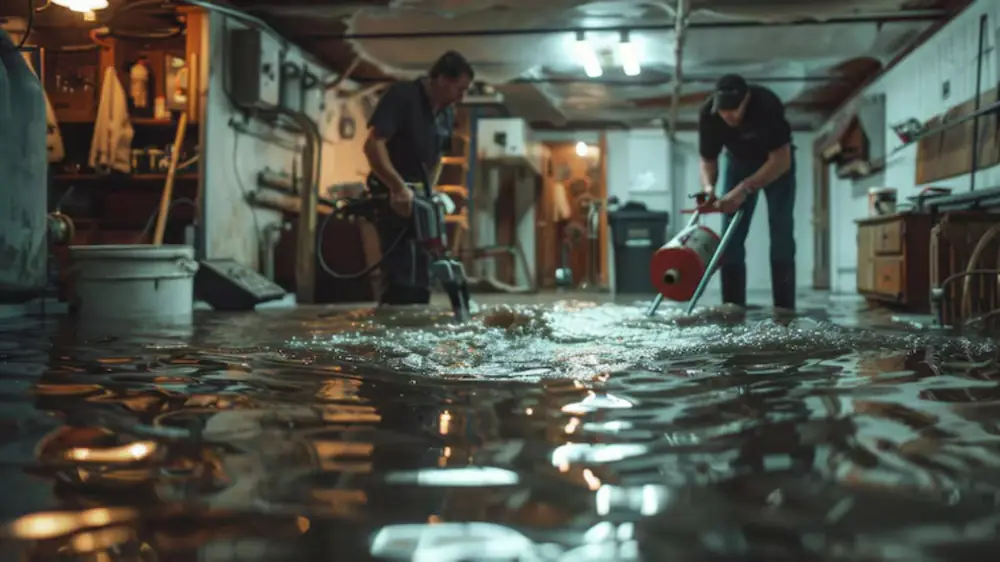
A burst pipe is the most common reason for an emergency call. The first move is the same every time: close the main water valve, then open a faucet at the lowest point to drain the line. If the burst is in an exterior wall or attic, expect water to have traveled farther than the visible wet spot.
North Texas does not freeze often, but the National Weather Service counts an average of 29 freezes per season at Dallas/Fort Worth for 1991 to 2020. Pipes in unheated garages, exterior walls and attics are the ones that fail, so know where your main shutoff is before the next hard freeze, and open cabinet doors on exterior walls during one.
What happens after the water is out
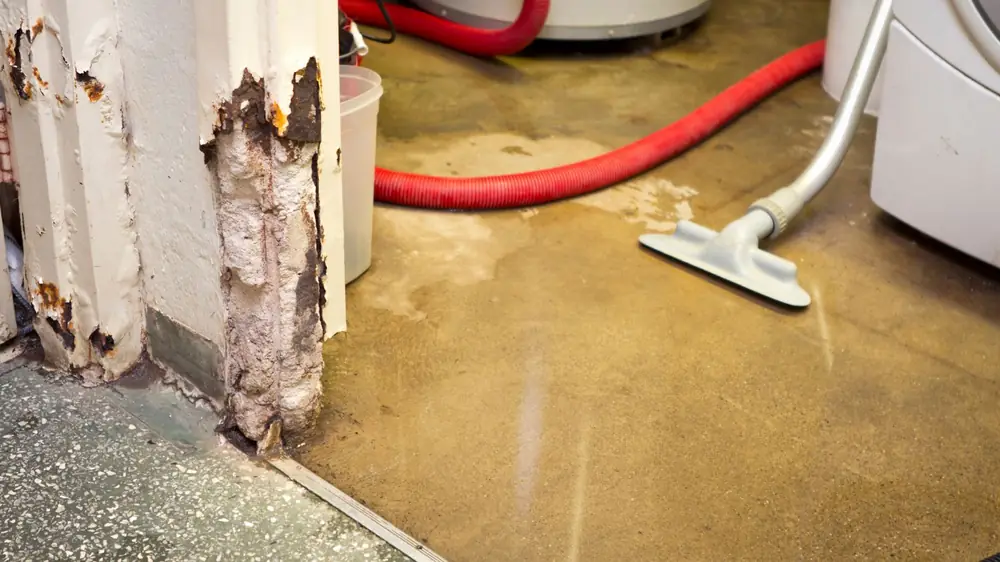
Once extraction is complete the crew moves to mitigation. Air movers and LGR dehumidifiers dry what the pumps could not reach, and any materials that cannot be saved are removed and bagged. The full process is described on the water mitigation page, and rebuilding follows under water damage repair.
If the water entered from outside, such as storm runoff or a rising creek, the job moves into flood damage restoration because the water is treated as contaminated.
Sewage or electrical contact
If the water came from a sewer line, a toilet backup or touched live wiring, do not walk through it. Open windows if it is safe, keep everyone out, and call. Raw sewage should only be handled by a crew wearing protective equipment.
Standing water now?
Call the 24/7 line and the dispatcher will walk you through shutting off the source while the crew is arranged.
What changes the scope of a removal job
| Factor | How it changes the job |
|---|---|
| Depth and volume of water | Deeper water needs pumps before extraction units |
| Water category | Contaminated water adds protective gear and disposal steps |
| Flooring type | Carpet and pad come out, while sealed hard floors can often stay |
| Number of rooms and floors | Water on a second floor can drip into the ceilings below |
| Time since the loss | Longer delays mean more removal and a longer drying period |
Scope and price are explained before the work starts. Most homeowner policies respond to sudden and accidental water, such as a burst pipe or an overflowing appliance, and not to slow leaks or flood water. Check your policy and ask your insurer before you assume either way, and keep every photo you take.
Coppell homes, offices and shared buildings
The City of Coppell has business center buildings along South Belt Line Road, office buildings along Freeport Parkway, commerce center buildings on Lakeshore Drive and commercial buildings on Fritz Drive. In multi-tenant buildings, a failed line in one suite can send water through a shared wall or ceiling into the next, so commercial tenants should call as soon as they see water and tell building management at the same time.
Residential calls come from neighborhoods across the city and from nearby towns, and the same crews also serve Irving and Lewisville.
Frequently asked questions
Do you handle water removal emergencies at night or on weekends in Coppell?
Yes. The line is answered 24/7, including holidays. Tell the dispatcher where the water is coming from and which rooms are wet, and you will get shutoff and safety instructions right away while a crew is arranged. Same-day response is the goal when it is available, with no promised arrival time.
Can I use a wet vac to remove the water myself?
A shop vacuum can help with a small spill on a hard floor, but it will not pull water out of carpet pad or reach water under cabinets. Never use it near wet outlets, and do not use it on sewage.
Will the carpet be saved?
Sometimes. If the water was clean and the carpet is extracted and dried quickly, it can often stay, but the pad underneath usually has to go. Contaminated water means carpet is removed.
How do I know where my main water shutoff is?
Most homes have a valve near the water heater, in the garage or where the supply line enters the house, and a meter box near the street. Find it before an emergency and make sure the whole household knows how to turn it.
How is water removal different from water mitigation?
Removal is getting the standing water out. Mitigation is the larger plan that includes removal, moisture mapping, drying equipment and removal of materials that cannot be saved. Most emergency calls need both.