
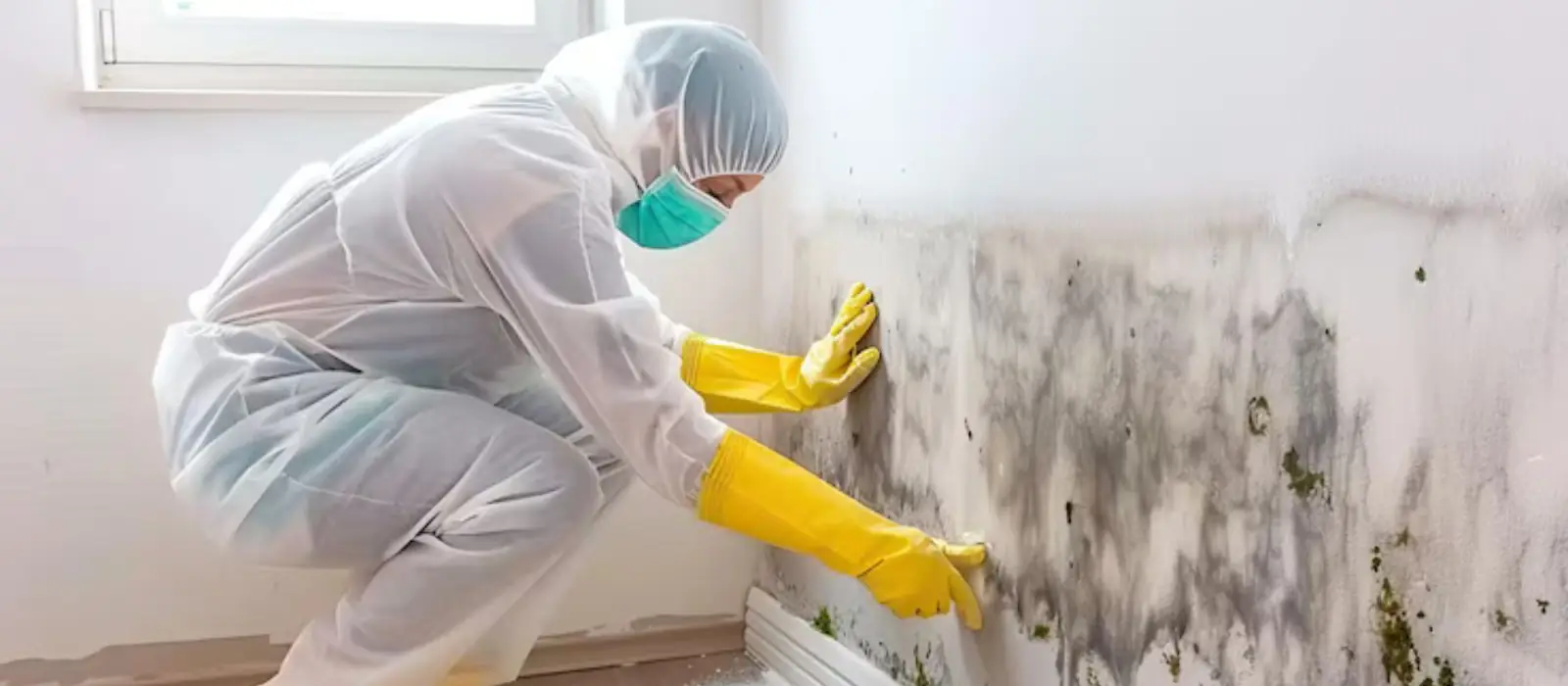
Mold remediation in Coppell, TX means finding the moisture that feeds the growth, containing the area, removing the contaminated material and drying the space so it stays dry. It is a secondary service next to water damage restoration, but it is one of the most common reasons people call, usually after a leak that went unnoticed.
If you see active water along with the mold, call the 24/7 dispatch line first so the water can be stopped. Mold on its own is scheduled work, and calls about it are welcome any time.
Dark spots, a musty closet or a smell you cannot place
Most people notice mold as a symptom first. A dark corner where the shower ceiling meets the wall, speckling in a closet that backs onto a bathroom, a stain on the baseboard that smells earthy, or carpet that feels damp near an exterior wall. These are common starting points, and many trace back to a leaking toilet or sink, an air conditioner condensate line, a roof leak or a pipe in the wall.
Mold is the name for the growth, and remediation is the name for the job of removing it correctly. If any of those symptoms sound familiar, a visual inspection and moisture readings are the usual first step.
Why moisture control comes before mold removal
Mold cannot grow without water, so remediation that ignores the water source only buys time. The Texas Department of Insurance notes that mold can start growing within a day after a leak, and that is why fast drying of a water loss is often the best mold prevention. If the water came from a roof, a plumbing line or a condensate overflow, that source has to be fixed by the right trade.
After the source is fixed, the area is dried to normal moisture readings. Remediation done on a wet wall will fail, and so will repainting over it.
Mold testing and inspection
Inspection begins with what is visible and what moisture meters and a thermal camera can show behind it. Testing can include air or surface sampling, and it is most useful for answering a specific question, such as whether a musty smell has a hidden source or whether an area is clear after remediation.
An independent assessment, done by a person who is not performing the removal, is the usual way to confirm clearance. Many people ask for this when a buyer or lender wants proof of removal before a closing. We cannot say how a particular lender will respond, but a written clearance result is the document most buyers and lenders ask for.
How remediation works under the S520 standard
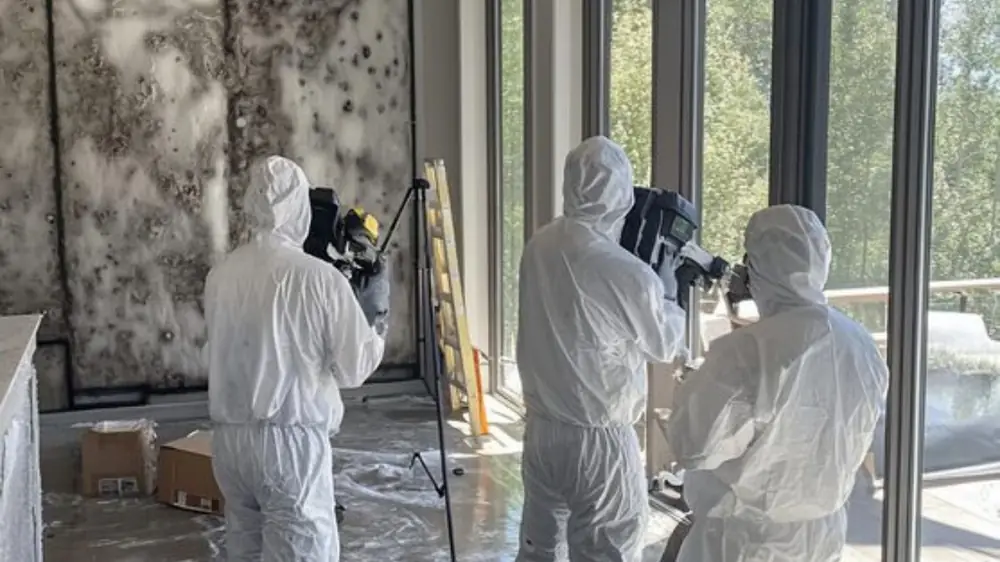
The ANSI/IICRC S520 standard is the published industry standard for mold remediation, and homeowners can ask any company whether its crews work to it. The general approach is containment with plastic barriers and negative air, HEPA air filtration, removal of porous materials such as drywall or carpet that cannot be cleaned, HEPA vacuuming and cleaning of what remains, and drying until the area meets normal moisture readings.
Hard surfaces can often be cleaned in place. Porous materials with growth are usually removed. A crew that tells you it can spray a coating over mold and finish the job is skipping the steps that matter.
| Step | What happens | Why it matters |
|---|---|---|
| Assess | Visual inspection and moisture readings | Finds the source and the extent |
| Contain | Plastic barriers and negative air | Keeps spores from spreading to clean rooms |
| Remove | Contaminated porous materials bagged out | Cleaning cannot fully restore them |
| Clean | HEPA vacuum and surface cleaning | Takes residual material from hard surfaces |
| Dry | Air movers and dehumidifiers | Brings moisture back to normal |
| Verify | Independent check or clearance testing | Shows the work met its goal |
Mold removal and black mold cleanup
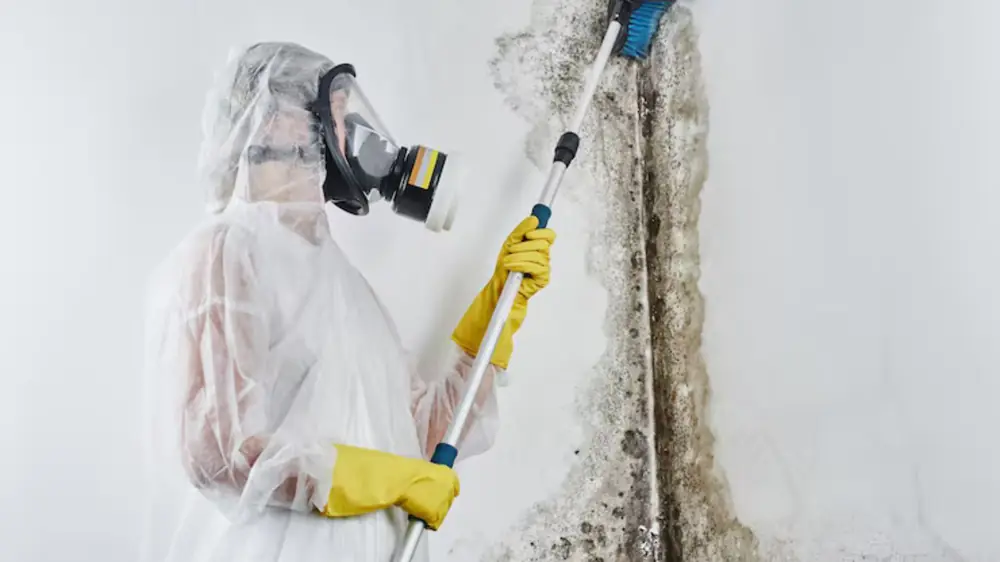
Black mold is a name for dark-colored growth, and color alone does not identify a species. What matters is the same on every job: how much surface is involved, what material it is growing on and whether the moisture source is fixed. A small patch of surface growth on tile is a cleaning task, and growth inside a drywall cavity or across a ceiling is a remediation job.
Questions about how mold affects anyone's health belong to a physician, not to a restoration company, and we do not offer a diagnosis.
Mold after water damage
When a water loss is not dried quickly, growth can begin in carpet pad, behind baseboards and inside wall cavities. The fastest way to prevent that is the mitigation described on the water mitigation page, and if growth has already begun, it is addressed before the area is rebuilt under water damage repair.
Insurance and licensing for mold work in Texas
The Texas Department of Insurance says most home policies cover mold that grows on a covered, sudden and accidental loss, while gradual leaks and flood-related mold are generally excluded. Mold cleanup and testing are often excluded unless you have added coverage, so ask your agent. TDI also advises confirming that a mold professional holds a state license, and says the professional must provide a certificate showing the mold was removed.
What to do and what not to do while you wait
- Stop the water source first, or confirm that someone has fixed it.
- Do not scrub, brush, sand or scrape the growth, because that spreads material into the air.
- Do not point a fan or the air conditioner at the area.
- Keep the area closed off and keep children and pets out of the room.
- Photograph the area and note when you first saw it and what leaked.
- Do not paint, caulk or cover it, since that hides the problem without removing it.
Questions about mold?
Call to talk through what you are seeing. If water is still leaking, say so first so the dispatcher can help you stop it.
What affects the cost of mold remediation
| Factor | How it changes the job |
|---|---|
| Area affected | More surface area means more containment and labor |
| Materials involved | Drywall, insulation and carpet are removed, hard surfaces cleaned |
| Location in the building | Attics, crawl spaces and wall cavities add access time |
| Moisture source | A plumbing, roof or HVAC fix may be a separate scope |
| Testing and clearance | Independent assessment is a separate step |
| Rebuild | Removed materials must be replaced |
Scope and price are explained before work starts. Mold is also found in Lewisville, Carrollton and the other towns we serve, and the same process applies.
Frequently asked questions
Do I need testing before remediation?
Not always. If growth is visible, an inspection and moisture readings may be enough to scope the job. Testing is most useful when you suspect hidden growth, or when you want independent confirmation that an area is clear afterward.
Will insurance cover mold removal?
Often only when the mold came from a covered, sudden and accidental loss. Gradual leaks and flood-related mold are generally excluded, and cleanup and testing may need added coverage. Ask your insurer.
My buyer's lender wants proof the mold is gone. What do I need?
A written clearance result from an independent assessor is the usual document. We cannot promise how a lender will respond, so confirm what it will accept before the work is scheduled.
Can I just paint over mold?
No. Paint covers the surface without removing the growth or fixing the moisture, and the problem tends to show through. Remediation removes the material and dries the space first.
Should I call about mold in a bathroom or closet?
Yes. Bathroom ceilings and closets next to wet walls are common spots, and the cause is often a small leak, a condensate line or poor ventilation. A visual inspection with moisture readings is the usual starting point.