
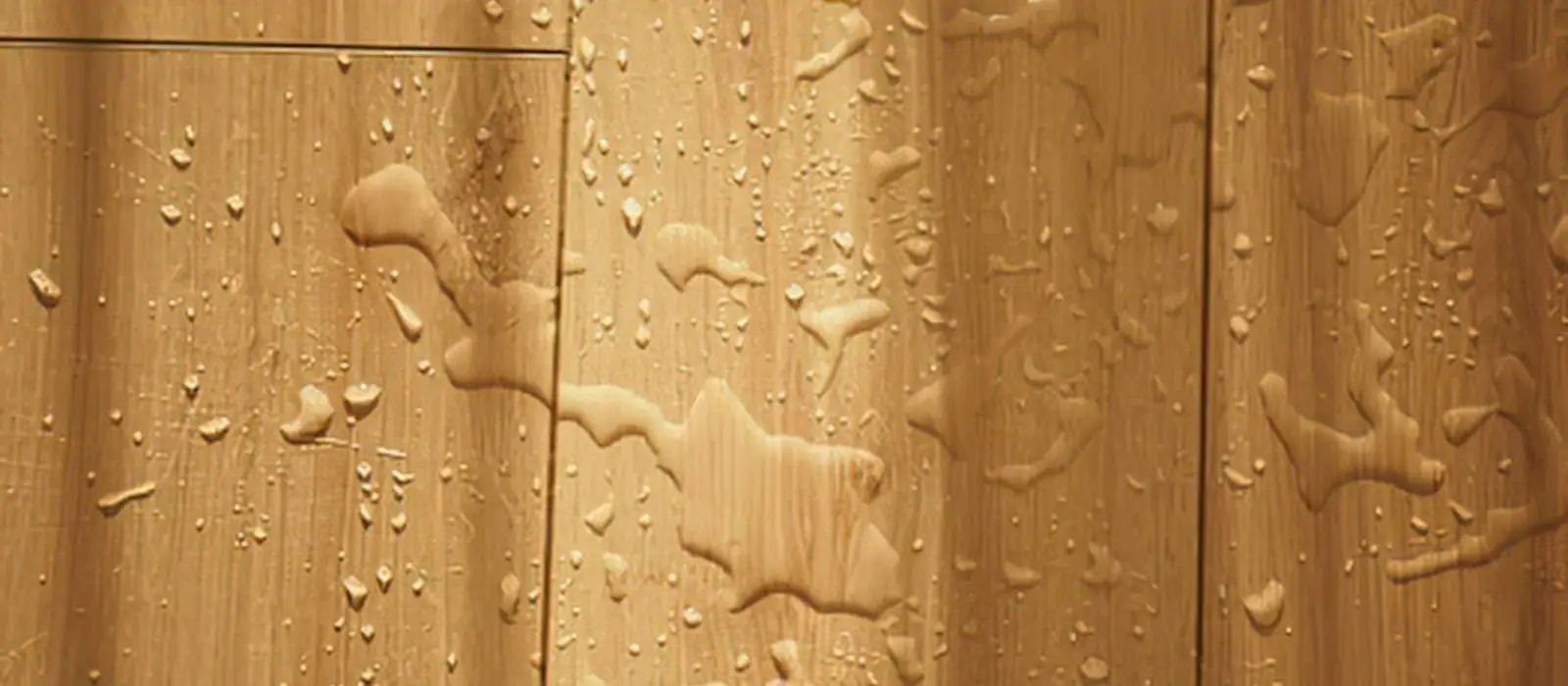
A washer valve lets go on a Saturday, a dishwasher line weeps behind a cabinet, or a pipe under the kitchen sink drips for a week. A few days later the hardwood floor in your Coppell, TX home has edges that sit higher than the centers of the boards. That curl is called cupping, and it is moisture working its way through the wood from below or from the side.
What cupping actually is
Wood swells when it takes on water and shrinks when it loses it. Cupping happens when the bottom of a board holds more moisture than the top, so the underside expands and the edges rise. It is a sign of uneven moisture, not a flaw in the floor.
That matters because the cure is moisture balance. Sanding a cupped floor that is still wet removes wood you may need and leaves the problem in place.
Why leaks and washer valves cause it
Water from a small leak does not stay on the surface. It runs under the baseboard, into the gap between boards and down to the subfloor. Boards act like a wick and pull water up the grain.
A burst washer valve can put out gallons a minute. Even a short event can soak an adjacent room, while a slow dishwasher or refrigerator line can wet a floor for weeks before anyone notices the first curl.
The first 48 hours matter most
Stop the source, then pull standing water with a wet vacuum or an extraction unit. Move rugs, furniture legs and anything that can stain the finish. Open nearby cabinets and doors so air can circulate under and around the affected area.
Do not lay towels over the boards and walk away. Towels hold moisture against the finish and slow evaporation. If the water has been there for more than a day, move straight to controlled drying with a water mitigation crew.
How slow drying works
A hardwood floor should be dried gradually. Drying too fast can crack boards, split the finish or leave the edges crowned instead of cupped. Crews set LGR dehumidifiers to lower the humidity and place air movers at controlled angles so the surface moisture moves out without stressing the wood.
For the worst-hit sections, mats connect to a vacuum system and pull moisture up through the boards. Readings are taken daily with a moisture meter on the same marked spots so progress is measured, not guessed.
What not to do while the floor is wet
Do not run a heater or point a high-heat fan at the boards, since fast surface drying makes cupping worse. Do not seal the floor with a new coat of finish while it is damp. Do not pull the baseboards and leave the wall open without a plan for drying the cavity behind them.
Keep foot traffic light, because wet boards bruise easily. If you must cross the room, lay down clean plastic runners rather than towels or rugs.
Also avoid covering the floor with plastic sheeting over a large area, which traps humidity at the surface and slows the drying that the boards need.
How long drying takes
Plan on several days for light wetting and a week or more for a heavily soaked floor with a wet subfloor. Cupping often eases as the boards come back into balance, but it can take weeks of ordinary indoor conditions for the last of it to flatten.
A floor that looks worse on day three is not failing. Boards can keep moving while the underside is still releasing water.
When to wait before sanding
Hold off on sanding until moisture readings in the boards match an unaffected part of the same floor, and until the cupping has stopped changing for a stretch of time. Sanding early can leave a flat surface that crowns later as the remaining moisture leaves.
A flooring contractor will usually want a flat reading from several spots across the room. Keep the dated moisture logs from your drying crew to hand over.
When boards must be replaced
| What you see | What it points to | Likely next step |
|---|---|---|
| Mild cupping, finish intact | Moisture in boards, subfloor mostly dry | Controlled drying, wait, then evaluate |
| Cupping plus gaps between boards after drying | Boards shrank unevenly | Often refinishing or section repair |
| Black staining at the seams | Long-term moisture exposure | Replace affected boards, check subfloor |
| Boards lifting off the subfloor | Adhesive or nails released | Replace and re-fasten |
| Dirty water source | Contaminated wood and subfloor | Remove affected flooring |
When replacement is the answer, the repair is a flooring and finish job that falls under water damage repair, and matching the stain and sheen to the old boards takes planning.
Floor still wet or still cupping?
Call the 24/7 line, describe the room and the source, and get a straight answer on drying options.
The ANSI/IICRC S500 standard is the published reference for drying goals. It has crews compare readings in the affected boards with readings from unaffected flooring in the same home, and that comparison is what tells you when a floor is dry enough to sand.
Coppell notes on floors, utilities and neighbors
The City of Coppell has Utility Billing and Water Service Setup pages. If you find a leak that you cannot trace, a spike in your water use on the bill can help confirm that something is running, so check recent bills alongside the floor.
Coppell borders Grapevine and Lewisville, and homeowners in both towns call about the same causes of cupping, such as appliance supply lines and slab-level leaks. You can read how this works nearby on the Grapevine and Lewisville pages.
Frequently asked questions
Will cupped hardwood go back to flat?
Often it improves a great deal once the boards dry evenly, but it can take weeks. If the boards stay cupped after the moisture readings are normal, a flooring contractor can sand them flat.
Can I use a regular box fan to dry my wood floor?
A fan helps surface water evaporate, but it will not pull moisture from the subfloor or boards. Without dehumidification the humidity just stays high in the room.
Should I pull up a cupped board to let it dry?
Not on your own. Lifting a few boards at the edge of a wet area can help air reach the subfloor, but the right boards to remove depend on moisture readings and how the floor is fastened.
Is hardwood cupping after a leak in Coppell, TX covered by home insurance?
Sudden and accidental water damage, such as a failed supply line, is often covered, while gradual leaks usually are not. Check your policy and ask your insurer, and keep photos and moisture logs for the claim.
How do I know if the subfloor is wet?
A pin or pinless moisture meter reading on the boards and the subfloor gives you the answer. Visual checks alone miss it.