
Anyone searching for how to fix water damage in Coppell, TX is usually standing in front of a stain, a swollen baseboard or a soggy patch of carpet. The fix is not one job. It is four jobs done in a fixed order, and most failed repairs come from doing them out of order.
The order is simple. Stop the water, dry everything that got wet, remove what cannot be saved, then rebuild. Skip the drying step and the new drywall goes over damp framing.
Stop the source before anything else
Find the main water shutoff and close it if a supply line, water heater or washing machine hose is still running. Fixture shutoffs under sinks and behind toilets are faster when the leak is local. If the water is coming from a roof, a tarp now is worth more than any repair later.
Photograph everything before you move it. Wide shots of each room and close shots of the damage give your insurer and any contractor a starting record of what the loss looked like on day one.
Dry the structure, not just the surface
A wall can feel dry and still hold moisture in the bottom plate and insulation. Pros use moisture meters and thermal imaging to find the edge of the wet zone, then set air movers and LGR dehumidifiers to pull the water out of the materials. A typical drying period runs three to five days, and it is finished when readings match a dry reference wall.
Opening a few small holes at the base of a wall lets air move through the cavity. That is cheaper and faster than guessing, and it keeps the framing from being sealed up wet. The full process is described on the water mitigation page.
Drywall: cut it back to dry, then replace
Wet drywall that has sagged, crumbled or stayed damp past a day or two should come out. Cut at least a few inches past the last wet reading, ideally to the nearest stud so the new board has something to screw into. Standard paper-faced board that has been soaked rarely recovers its strength.
Hang the new board, tape and mud the seams in thin coats, let each coat dry, sand, prime and paint. Priming matters because stain blockers keep old water marks from bleeding back through the paint.
Insulation that got wet
Fiberglass batts that were splashed from a pipe leak can sometimes be pulled out, dried and reinstalled if they were clean water. Blown insulation and batts that sat in water for days should be bagged and replaced, because wet insulation holds moisture against the framing for a long time.
Dry the cavity fully before new insulation goes in. Closing a wall over damp insulation is the most common reason a repair looks fine for a month and then smells musty.
Carpet and pad
The pad is the weak point. Foam pad holds water like a sponge and is cheap to replace, so it usually goes even when the carpet above it can be saved. Clean water caught within a day or so often allows the carpet to be lifted, dried with an air mover and relaid.
If the water was dirty, such as a washer drain overflow or anything from a toilet, the carpet and pad should be discarded. A cleaning crew can handle that scope under water damage cleanup.
Laminate and hardwood floors
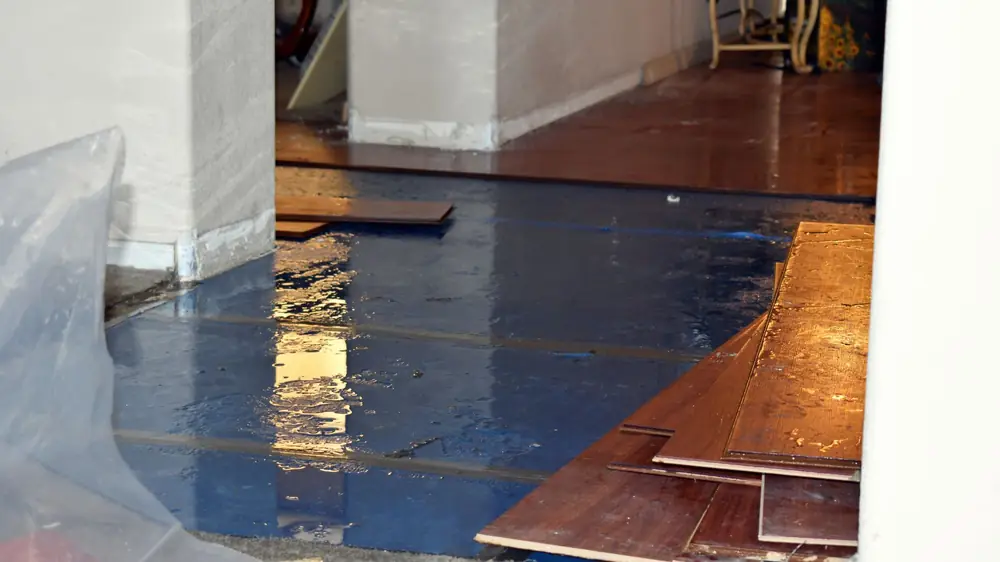
Laminate swells at the seams and rarely goes back to flat once the core has absorbed water. Plan to replace the affected planks. Engineered and solid hardwood behave differently, since boards can be dried in place with mats and dehumidification if the response is quick.
Do not sand or refinish until the moisture content of the boards matches an unaffected area. Finishing wet wood traps moisture and invites cupping to return.
Cabinets and baseboards
Baseboards are easy to pull, dry behind and reinstall or replace. Cabinet toe kicks and the particleboard under a sink are harder, because particleboard swells and crumbles when wet. Solid wood and plywood cabinets usually dry well if the cabinet base is opened up for airflow.
Check the back of lower cabinets for dark staining or a musty smell. If you see it, treat the area as a moisture problem first and a cosmetic one second.
DIY or call a pro
| Situation | Reasonable DIY | Call a crew |
|---|---|---|
| One small clean water spill on tile | Mop, fan, check again in a day | Not needed |
| Wet drywall under 2 feet high, clean water | Cut, dry with fans, patch after readings | If it kept getting wetter after a day |
| Soaked carpet and pad, clean water | Lift pad, run fans, replace pad | If the carpet stayed wet for more than a day |
| Hardwood cupping or wet subfloor | Nothing beyond stopping the source | Controlled drying with mats and dehumidifiers |
| Ceiling water from an upstairs leak | Contain with a bucket and puncture a small relief hole | Wet insulation and framing above the ceiling |
| Sewage or flood water of unknown origin | Stay out and keep others out | Always, with protective gear and disposal |
The table is a starting point, not a rule. When a loss crosses rooms, involves electrical outlets, or has been wet for more than 48 hours, hiring help costs less than redoing the repair.
Water still in the walls?
Describe what you see and dispatch will tell you whether it needs a drying crew or a repair crew.
Rebuild order and when to call about repairs
Once readings are dry, the rebuild runs from the inside out: insulation, drywall, paint, flooring, then trim. Doing floors before paint risks drips on new flooring. Doing trim before floors leaves gaps.
Larger rebuilds with structural framing, subfloor sections or cabinet runs are covered under water damage repair. A written scope that lists each room and material avoids surprises when the invoice arrives.
Coppell notes on repairs and permits
The City of Coppell has a Permits page and an online permit self-service portal. Permit rules depend on the scope of work, so ask the city building department before you open a wall for anything beyond a patch, and keep the answer in writing with your repair records.
Coppell counted 15,498 housing units in the 2020 Census. With that many homes sharing similar supply lines, water heaters and appliance hookups, leaks are a routine event, which is why a written scope and dated moisture readings are worth asking any contractor for before work starts.
Neighbors in Carrollton and Irving deal with the same repair sequence, so the order in this guide holds across the area.
Frequently asked questions
How long should I wait before patching drywall after a leak?
Wait until moisture readings in the wall and bottom plate match a dry reference wall. For a small clean water leak that is often three to five days with fans running. Patching earlier traps moisture.
Can I fix water damage myself and still file an insurance claim?
Yes, but document first. Take photos and video, keep damaged materials until the adjuster has seen them if you can, save receipts for temporary repairs, and ask your insurer what they need before permanent work starts.
Is a stain on the ceiling still water damage if it looks dry?
Often yes. A dry-looking stain means the surface dried while the insulation or framing above may still be wet. A moisture meter reading tells you more than the paint does.
Who handles water damage repair in Coppell, TX after the drying is done?
Repair work such as drywall, flooring and cabinets is a separate phase from drying. Ask for a written scope per room, and ask the City of Coppell building department whether your project needs a permit.
Does repair order matter if I plan to sell the house?
Yes. Keep the moisture readings, photos and invoices together. A buyer or inspector will ask what was wet, how it was dried and when the repairs were finished.