
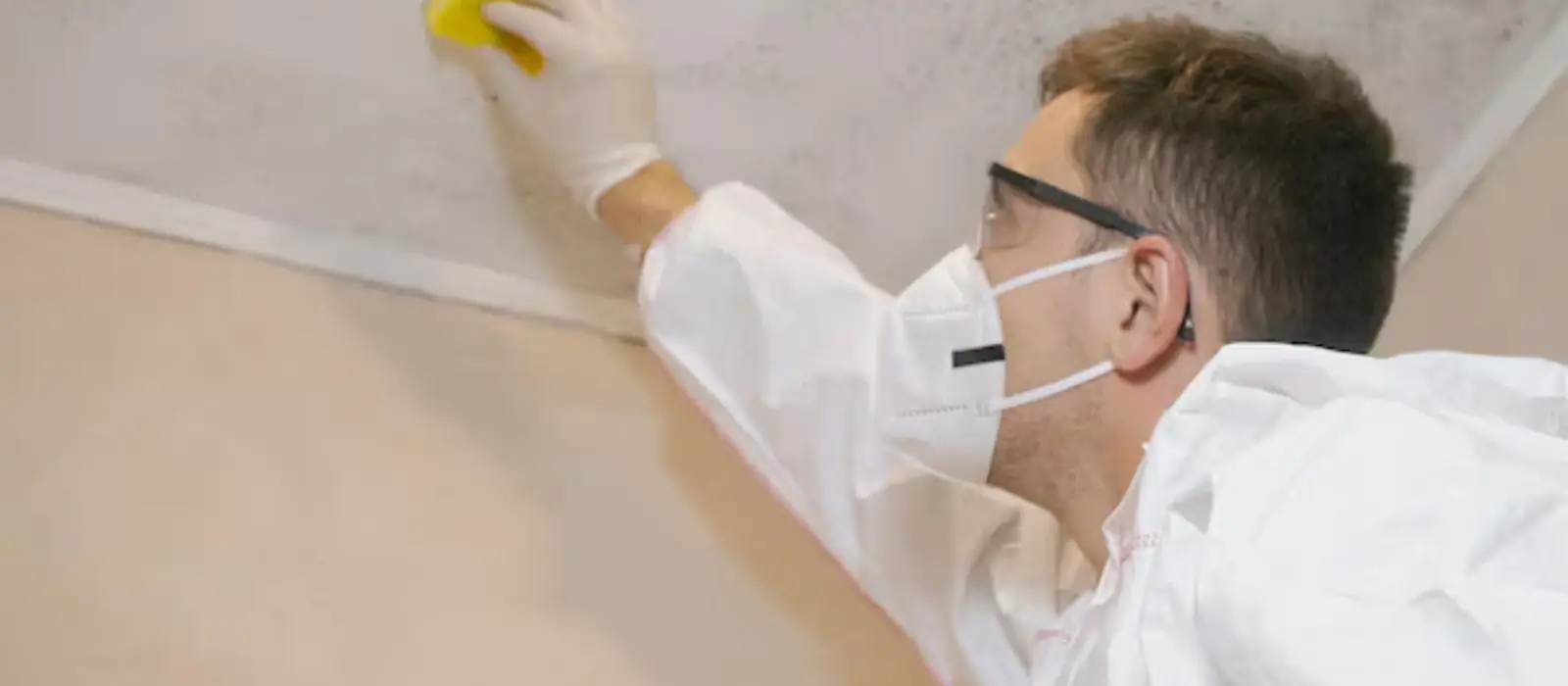
Most people who want to remove mold from a bathroom ceiling in Coppell, TX start with a spray bottle. That can be the right call for a small stain on a hard, sealed surface, and it can be the wrong call when the ceiling itself is damp.
This guide is about telling the difference, then doing the surface work safely or handing the job over before it grows.
Decide first whether the moisture source is fixed
Cleaning without fixing the cause is the single most common reason mold returns. Before touching the ceiling, check the exhaust fan, the shower enclosure caulk, the attic above and any plumbing in the wall cavity.
If the ceiling is wet to the touch, bubbling or soft, the problem is bigger than a surface stain. A moisture meter reading above the surrounding dry area tells you the material is still holding water.
Porous and nonporous surfaces behave differently
Painted drywall is porous. Mold can send growth into the paper face and the gypsum behind it, so wiping the paint only removes what you can see. Tile, glass, sealed fiberglass and metal fixtures are nonporous, so cleaning the surface does reach the whole problem.
Ceilings are usually drywall with texture and paint, which is why a stain that looks small may extend further than it appears. Textured finishes also trap growth in the peaks, and scrubbing them can break off the texture.
| Situation | Reasonable approach | Better to call a crew |
|---|---|---|
| Small speckles on a sealed or painted surface, dry underneath | Careful surface cleaning after the cause is fixed | If marks return within weeks |
| Large patch or one spreading to walls | Do not scrub | Yes, call for an assessment |
| Soft, sagging or bubbling drywall | Do not scrub | Yes, the material is wet |
| Musty smell with no visible source | Check fan and attic | If the smell persists |
| Growth after a known leak or plumbing failure | Stop, photograph | Yes, call for an assessment |
Protective gear in general terms
Anyone cleaning visible growth should wear an N95 or better respirator, eye protection that seals, long sleeves and gloves. Open the bathroom window or run the fan, close the door to the rest of the house and keep children and pets out.
Mold fragments are lightweight and move easily through the air when disturbed. Dry brushing or spraying heavily overhead sends them across the room, so keep the work damp and slow.
Never mix cleaning chemicals
Bleach, ammonia, vinegar and many cleaning products release harmful gases when combined. A small closed bathroom is the worst place to learn that. Pick one product, follow its label, ventilate and rinse before using anything else.
A basic detergent and water wipe, using a cloth you discard afterward, is a reasonable start on a hard surface. Using more product does not mean better results.
A cautious method for a small nonporous spot
- Fix and verify the moisture source, and run the fan for a day to let the area dry.
- Put on the respirator, eye protection and gloves.
- Dampen a cloth with detergent and water, and wipe the spot with light pressure in one direction.
- Discard the cloth in a sealed bag and rinse the area with a fresh damp cloth.
- Dry the surface and watch it for several weeks.
If the mark comes back, stop. The growth is probably fed by moisture you have not found, and more scrubbing will not change that.
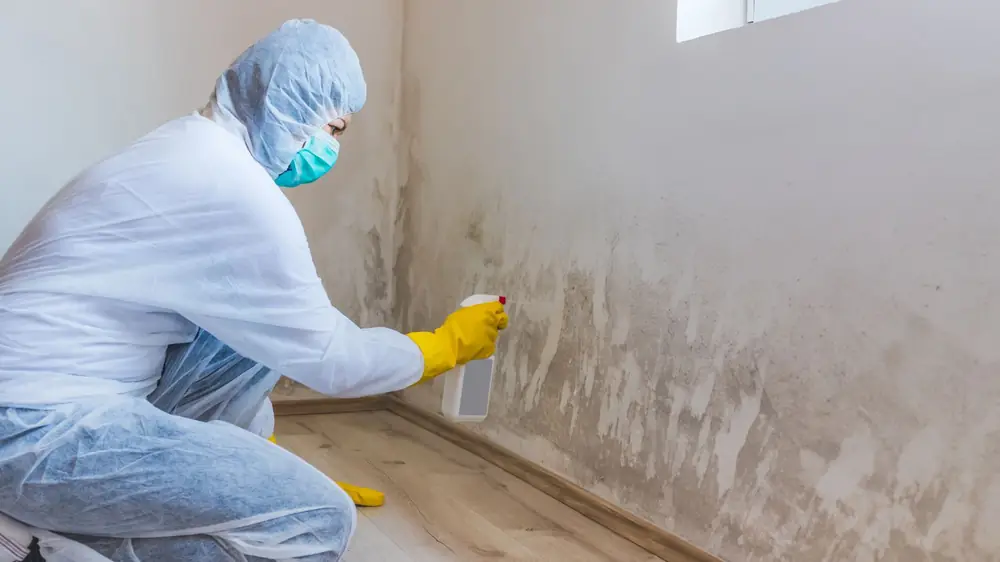
What a remediation crew does differently
Under ANSI/IICRC S520, the published industry standard for mold remediation, the crew contains the area with plastic barriers, uses HEPA air filtration and removes affected porous material such as ceiling drywall instead of trying to clean it. The work area is then cleaned, dried and checked before the barrier comes down.
That is why a larger or recurring ceiling problem is a job for professional mold remediation, not another weekend of scrubbing.
Repair comes after the ceiling is dry
Once the area is dry and any contaminated drywall is gone, the ceiling is patched, textured and painted. Using a stain-blocking primer is common, but paint over a damp surface only hides the problem.
The rebuilding stage is described on the water damage repair page, and it normally follows a moisture check showing the framing has reached a normal reading.
Habits that keep the ceiling dry
- Run the exhaust fan during every shower and for at least twenty minutes after.
- Check that the fan vents outdoors and not into the attic.
- Replace cracked caulk around the tub or shower.
- Wipe down the ceiling and walls if condensation is visible.
- Watch the ceiling after rain for new marks.
None of these guarantee a result, but they remove the conditions that mold needs to grow, which is moisture lasting more than a day.
Unsure whether it is a cleaning or a job?
Call and describe the size, the surface and whether it is wet, and dispatch will tell you what the next step looks like.
Coppell notes before you hire help
Texas Department of Insurance guidance says to confirm that a mold professional holds a state license, to expect an inspection showing the mold was removed and the cause was fixed, and to receive a certificate that the mold was removed. Ask for those items before any remediation work starts in your Coppell home.
The same guidance notes that mold cleanup and testing are typically excluded from home policies unless that coverage was added, so ask your agent. If the cause was a sudden, covered leak, call your insurer before the ceiling is opened so the damage is documented first.
Frequently asked questions
Can I remove mold from a painted bathroom ceiling myself?
A small spot on a dry surface can sometimes be cleaned, but a large or recurring patch needs an assessment. Health questions about mold belong to a physician.
Will paint with mold inhibitor fix a ceiling?
Paint does not stop moisture from entering the ceiling. If the source is still active, the problem will usually reappear underneath.
What if my Coppell house is on a slab and the bathroom ceiling is upstairs?
Upstairs bathrooms add another path, because water can travel from the supply lines and drains into the ceiling below. A moisture meter on the first-floor ceiling often reveals it.
Should I test the mold before cleaning?
Testing is not always needed to decide on removal, and it is typically excluded by home policies. A lender or inspector may request it separately.
Which nearby towns do you cover for ceiling mold?
Dispatch covers Coppell and nearby areas including Grapevine and Lewisville.