
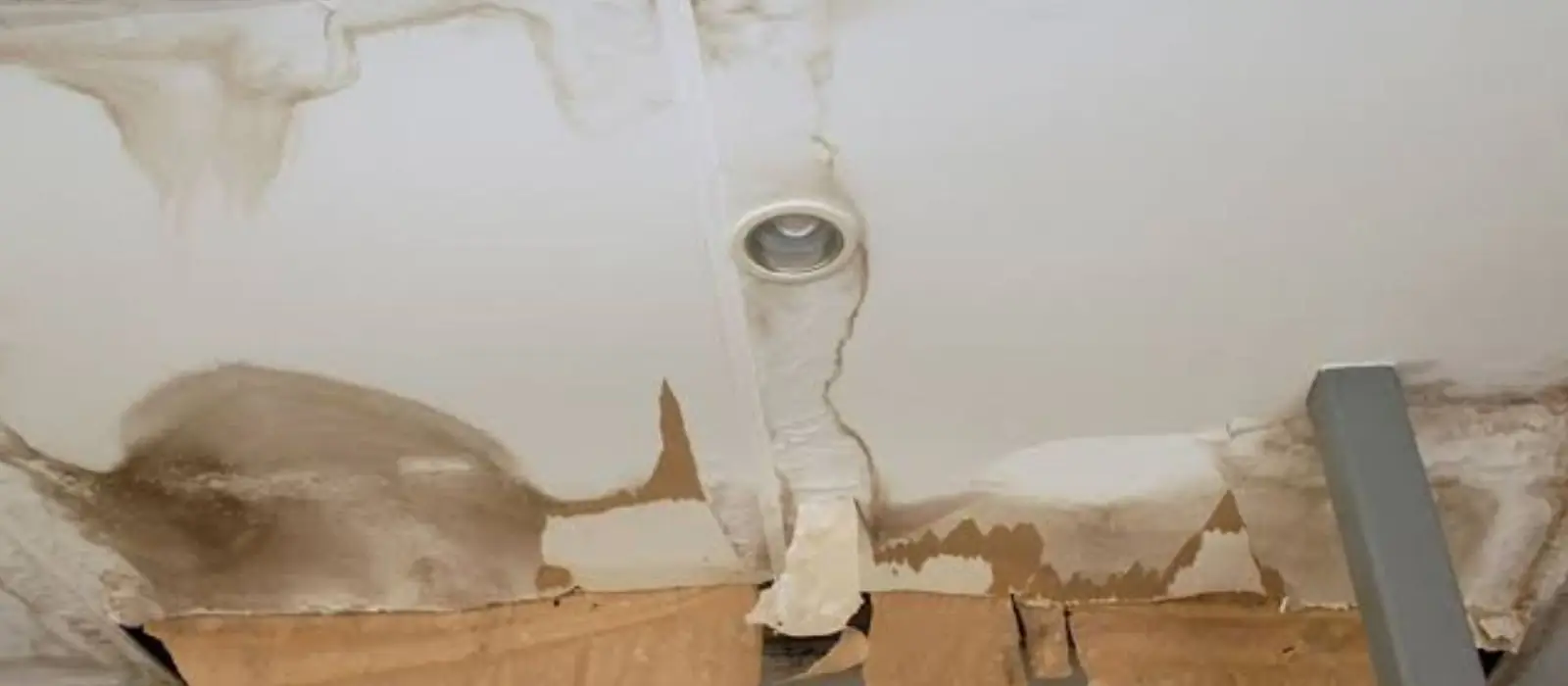
Patching a stained ceiling is easy to start and easy to get wrong. If you want to repair a water damaged ceiling in Coppell, TX, the order of the work matters more than the skill with a putty knife.
This guide covers the rebuild steps that come after the leak is stopped and the materials are dry, then explains where a do-it-yourself job should hand off to a professional.
Before any repair, confirm two things
First, the source of the water must be fixed. A roof flashing, a fixture upstairs or a condensate line that keeps dripping will ruin a new patch within weeks.
Second, the ceiling and the space above it must be dry. Press a moisture meter against the surface and read the framing and insulation as well. If you do not own a meter, a restoration crew can take readings during a drying visit, which is part of water mitigation.
Safety checks that come first
A ceiling that is bulging holds water, and it can release it all at once. Place a bucket under the lowest point, then puncture the bulge from the side with a small hole so the water drains in a controlled stream. Stand clear of the area directly below.
If water has reached a light fixture, ceiling fan or any outlet, turn off power at the breaker only if you can reach the panel while standing on dry ground. Otherwise stay out and call the electric utility or 911 for any shock or fire risk.
Tools and materials
- Utility knife, drywall saw and a pry bar
- Respirator rated for dust, safety glasses and gloves
- Replacement drywall in the same thickness as the old ceiling
- Fiberglass mesh tape, joint compound and a taping knife
- Stain-blocking primer, texture material and ceiling paint
Step one: cut out what is no longer sound
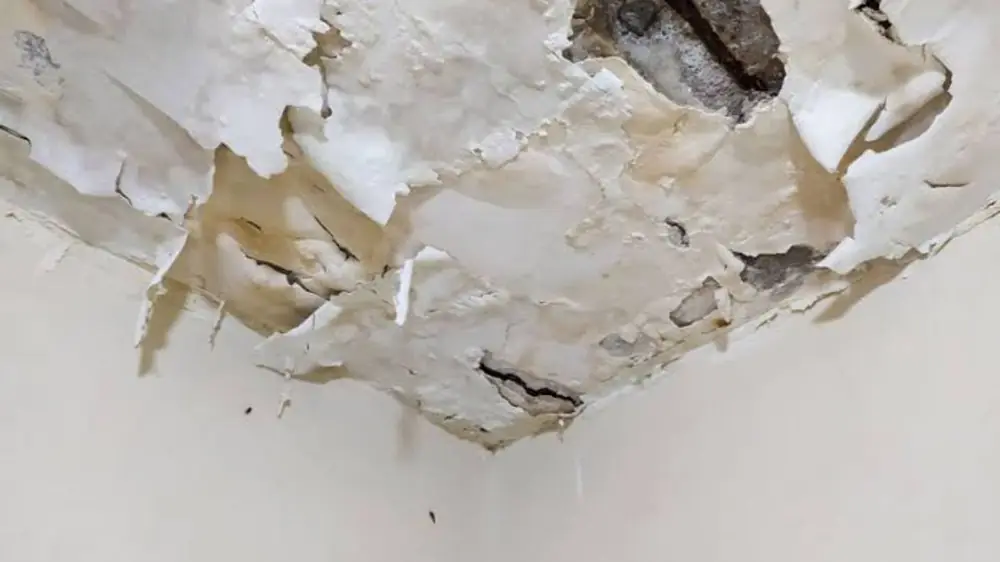
Drywall that has sagged, softened or crumbled when pressed has lost its strength and should come out. Mark a square or rectangle that reaches the nearest joists on each side, so the new piece has framing to screw into.
Score the outline with a utility knife and cut with a drywall saw. Remove the piece in sections and bag the debris, since wet gypsum is heavy and messy.
Step two: inspect and replace insulation
With the opening exposed, look at the insulation, the joists and the back of neighboring drywall. Insulation that stayed wet loses its value and should be replaced. Joists should be dry and free of soft spots.
If the wet area is larger than the opening you cut, widen it until you reach dry material on every side. A small hole that follows only the visible stain often leaves damp drywall behind.
Step three: hang the patch
Cut a new piece of drywall to fit, add backing strips if the opening does not land on a joist, and screw the patch in with the screws sitting just below the surface. The new board should sit flush with the old ceiling.
Large patches are awkward to hold overhead. A second person or a drywall lift makes it faster and keeps the board from cracking.
Step four: tape, mud and sand
Cover the seams with mesh tape and spread a thin coat of joint compound across them. Let it dry completely, then apply a second and third coat, each slightly wider than the last. Sand lightly between coats.
Rushing coats is the usual cause of visible ridges. Patience here saves a lot of correction after the paint goes on.
Step five: texture, prime and paint
Many Coppell ceilings carry a sprayed or hand-applied texture. Practice on a scrap board first and match the pattern with a roller, brush or spray can made for the job.
Once the texture dries, seal the whole repaired area with a stain-blocking primer. Water stains bleed through ordinary paint, so skipping this step brings the brown ring back. Finish with two coats of ceiling paint, extending the second coat to a natural edge so no patch outline shows.
Planning the work across a few days
A small patch is not a single afternoon job. Joint compound needs time to cure between coats, and primer and paint need their own drying time. Expect to spread the work over at least three days, with the room ventilated.
Move furniture out from under the work area and cover floors with drop cloths. Ceiling dust travels farther than most people expect, and sanding is where it gets worst.
When to stop and call a professional
- The ceiling is sagging across a large area or is still wet
- The water came from a toilet, drain or sewage line
- Insulation or framing looks dark, soft or stained
- The leak ran for days before you noticed it
- An insurance adjuster will inspect the damage
Larger jobs often involve drying, tear-out and rebuild in one coordinated plan. The water damage repair page describes what that looks like when the ceiling is only part of the loss.
Not sure the ceiling is dry enough to patch?
Call the 24/7 line and describe the stain, the room above it and how long it has been wet.
Drying goals for a ceiling cavity come from the ANSI/IICRC S500 standard, which uses readings from unaffected materials in the same house as the target. A patch should wait until the damaged section meets that target, not until it merely looks dry.
Coppell notes for ceiling work
Most Coppell homes were built between the late 1980s and the 1990s, since the city grew from 3,826 residents in 1980 to 35,958 in 2000 and had nearly all of its residential land developed by then. That is an inference from those dates. Texture styles from that era vary, so photograph your ceiling in raking light before shopping for matching material.
Texas Department of Insurance guidance advises documenting damage with photos before repairs and keeping damaged items until the adjuster has looked at them. Cut out and bag the wet drywall only after the adjuster has seen it or you have clear photos and a sample.
Frequently asked questions
How long should a ceiling dry before I patch it?
Until moisture readings match an unaffected ceiling in the same house. The number of days varies with how wet the materials were and how much air movement and dehumidification they received.
Can I paint over a water stain without cutting anything out?
Only when the area is fully dry, firm and the leak has been fixed. Use a stain-blocking primer first, since ordinary paint lets the stain show through.
Should I replace a ceiling fan or light fixture that got wet?
Have an electrician check anything that was in contact with water before it is switched on again. A fixture that looks fine can still have wet wiring.
Do ceiling repairs in Coppell, TX require a permit?
Permit rules vary, so ask the City of Coppell building permits office before starting work that goes beyond a patch and paint.
Does home insurance pay for ceiling repair after a leak?
Most homeowner policies cover sudden and accidental water damage, while gradual leaks are generally not covered. Report the damage promptly, and check your policy for what applies.
Crews also respond across the city line in Irving and Lewisville.