
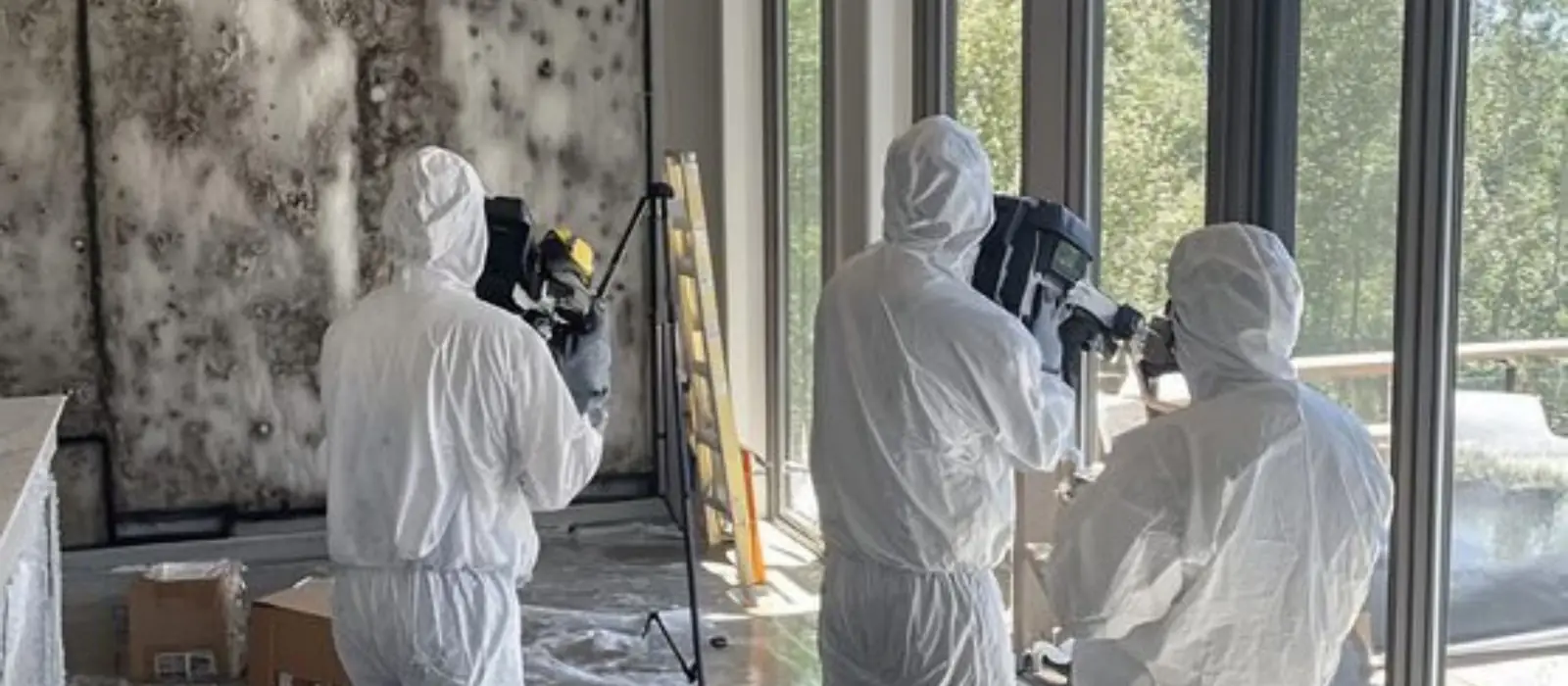
The offer was accepted, the inspection is back, and now the report mentions mold. For a seller in Coppell, TX, this is a schedule problem as much as a cleanup problem. For a buyer, it raises the question of who fixes it, who proves it is fixed and whether the loan can still close.
This guide covers how mold clearance testing works in a home sale, who usually asks for it and where the process can stall.
Where mold shows up in a sale
It usually appears in one of three places. An inspector spots staining in a closet or bathroom ceiling, an appraiser notes a damp smell, or a seller disclosure mentions an old leak. Any one of these can trigger a request for removal and proof.
Past leaks are a common thread, such as a toilet supply failure, an AC condensate line overflow or a roof leak that wet an upstairs closet wall.
Who asks for clearance testing
Buyers ask because they want evidence. Lenders and appraisers sometimes require that visible mold be removed before they will proceed. Sellers ask for it voluntarily to move past the issue.
Requirements differ from lender to lender and file to file, so no one can promise that a given report will satisfy a particular lender. The lender or loan officer is the only source for that answer.
The usual order of events
- The inspection or appraisal flags the area.
- Parties agree on who pays for assessment and removal in the contract amendment or repair addendum.
- A moisture assessment finds the source and the extent of the wet materials.
- The source is repaired, whether a plumbing, roof or HVAC fix.
- Removal happens under containment, following the ANSI/IICRC S520 standard as a published practice.
- Drying confirms moisture readings are normal.
- An independent party tests or inspects and issues a clearance report.
- The report goes to the buyer, the lender and the file.
Skipping steps three and four is the quickest way to end up repeating the process, because mold returns where moisture stays. The removal step itself is covered on the mold remediation page, including how containment and air filtration are set up.
Order matters for the paperwork as well. A clearance report dated before the repair was finished tells a lender nothing, so schedule the tester after drying is confirmed and the area is closed up or rebuilt as agreed.
A short timeline to plan around
A small closet job can move from assessment to clearance within about a week when the source is already repaired, while a job with open walls, a plumber and a lab turnaround takes longer. Treat any date a contractor gives as an estimate until the source is fixed.
Ask your agent to put the dates for each step into the repair addendum so everyone is working from the same calendar.
If the closing date is close, tell every party on day one. Contractors, testers and lenders can often reorder their own work when they know the deadline, but they cannot do it after the fact.
What a clearance report is
A clearance report documents conditions after remediation. Depending on the project, it may include visual inspection, moisture readings and air or surface samples sent to a lab, compared against a reference such as outdoor air or an unaffected room.
It is a snapshot of the space on a given day. It describes what was found and tested, and it does not promise anything about the future.
Why independent testing matters
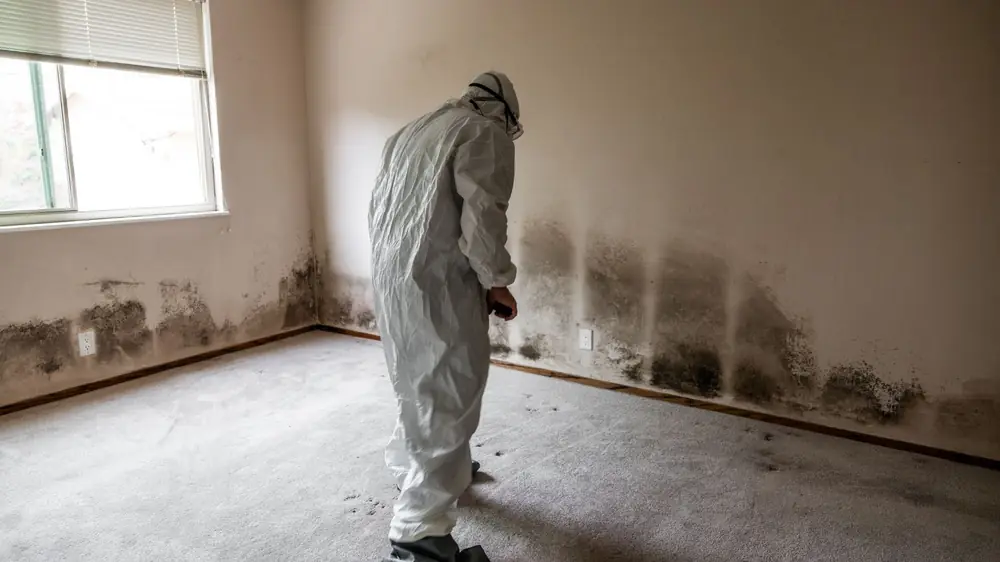
A company that removes mold and then grades its own work has a built-in conflict. An independent party, who does not perform the removal, gives buyers and lenders a cleaner record.
Ask who selects the tester, who pays the lab fee and who receives the results. These details are better settled before work begins.
What the seller can do first
Collect everything you have on the leak history. Plumber invoices, drying logs, photos and any earlier repair records tell the story of what happened and when it was fixed.
If the leak was recent, a water mitigation crew can document drying with moisture readings, which becomes part of the file the buyer sees.
What a buyer should ask for
- A written scope that identifies the room, materials and moisture source
- Dated photos before, during and after removal
- The independent clearance report in full, not a summary
- Proof that the moisture source was repaired
- A statement of what was rebuilt and by whom
Lenders and title companies may want some of these documents in the loan file, so ask the loan officer what to bring.
Need removal before a closing?
Call the line, explain the timeline and get a plain description of how scope and sequence are handled.
Why delays happen
Most delays come from a missing step. The moisture source was not fixed, the testing was scheduled after the closing date or the report went to the wrong party. Lab turnaround can also add days.
Build a schedule backward from the closing date and ask each party how long their step takes. Where the date cannot move, an extension in writing is better than a rushed job.
What to do before the closing date
- Ask the buyer or lender, in writing, what proof of removal they will accept.
- Fix the moisture source first and let the area dry, since removal over a wet cause will fail.
- Do not paint or cover the area before the assessment.
- Schedule remediation and the independent clearance check with enough days before closing to allow for results.
- Keep the written scope, the clearance result and the certificate for your records.
Coppell notes for sellers and buyers
The City of Coppell has a Permits page and an online permit self-service portal. If the removal involves rebuilding walls, ask the city building department whether a permit is needed, because a buyer's agent may ask for permit paperwork on recent repairs.
Coppell borders Carrollton and Grapevine, and many buyers search across all three cities at once. Transactions in Carrollton or Grapevine follow the same general sequence of assessment, removal and clearance.
The DART Silver Line passes through Coppell with no station in the city, so commuters often prioritize roads and driving time. Whatever drives the decision, a mold issue in the disclosure should be resolved on paper before it affects the contract.
Frequently asked questions
Does removal always require clearance testing?
No. Testing is typically asked for by a buyer, lender or insurer, or chosen by the seller. Many removals finish with a visual inspection and moisture readings.
Can a seller skip removal and offer a credit instead?
That is a negotiation between the parties and their agents. A buyer's lender may still require the issue to be resolved before closing.
Will a clearance report guarantee my loan closes?
No. A report is documentation. The lender decides what satisfies its own requirements.
Who should hire the tester in a Coppell, TX home sale?
It is usually negotiated. A tester who is separate from the removal company gives the cleanest record, so agree on the choice and the fee before work starts.
What if mold is found after I already moved in?
Document the area with photos, find the moisture source, and review your purchase paperwork and policy. Ask your insurer and an attorney about your options.