
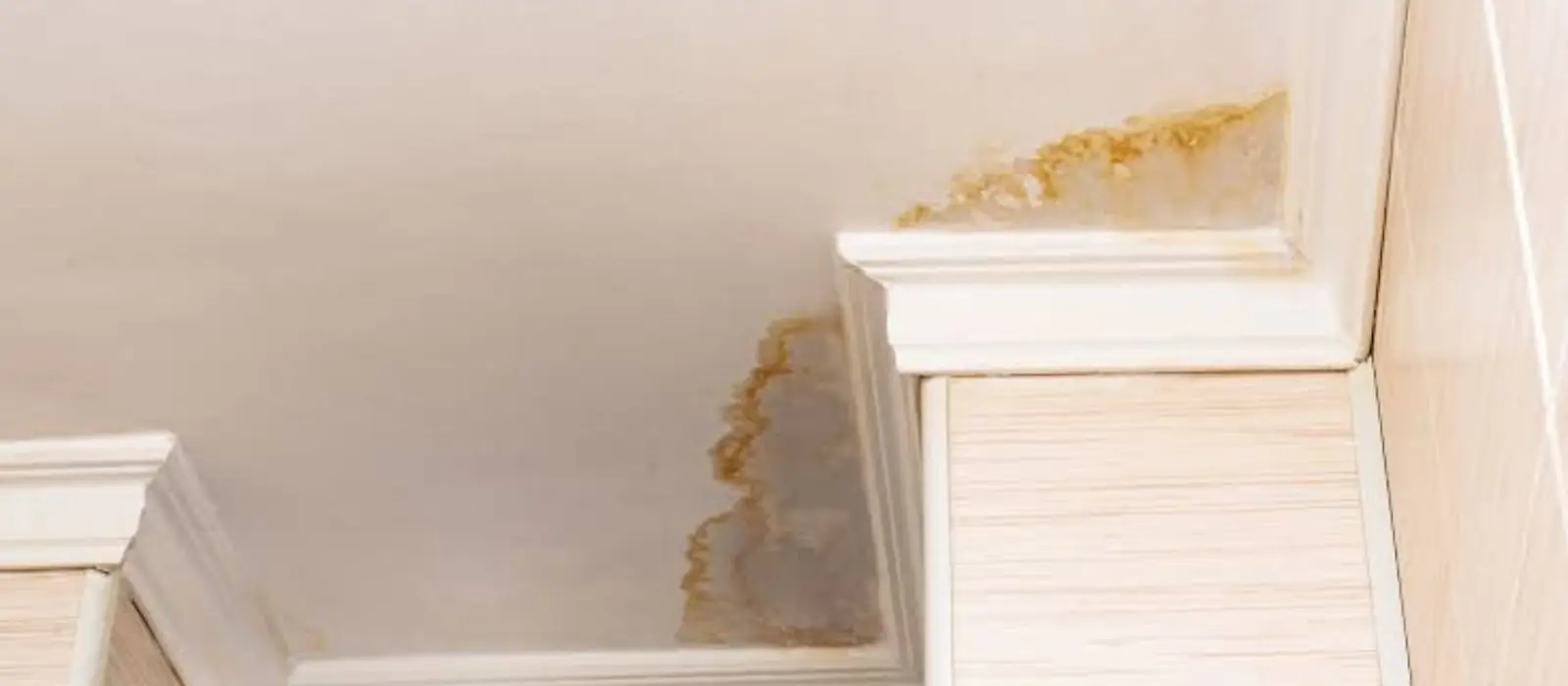
Brown rings, a soft spot, paint that looks like it is breathing. These are the common faces of water damage in a ceiling, and in Coppell, TX they trace back to a short list of sources.
The stain is only where the water finally showed itself. Water travels along framing, pipes and insulation before it drips, so the source is often several feet from the spot you can see.
Step back and read the stain
Look at the shape first. A single round ring with a dark edge usually means an old, repeated leak that wet and dried several times. A fresh, light patch that grows over hours points to active water.
Press gently near the stain with a gloved hand. Soft, spongy drywall is saturated, and a bulge means water is pooled above it. Treat a bulge as urgent, because ceiling board can fail suddenly.
The usual suspects, matched to what you see
| What you notice | Likely source | First check |
|---|---|---|
| Stain appears after a heavy rain | Roof flashing, shingles or a vent boot | Attic decking and insulation below the roof |
| Stain near a hallway or closet with an air handler | Clogged HVAC condensate line or full drain pan | The pan and the drain line at the unit |
| Stain below a bathroom or laundry room | Supply line, drain or tub seal upstairs | Under the fixture and around the shutoff valves |
| Stain on a cold day with no rain | Frozen or split pipe in an attic or wall | Exposed pipes in unconditioned spaces |
| Damp spots along an exterior wall line | Wind-driven rain at a window or siding joint | Caulking, flashing and trim |
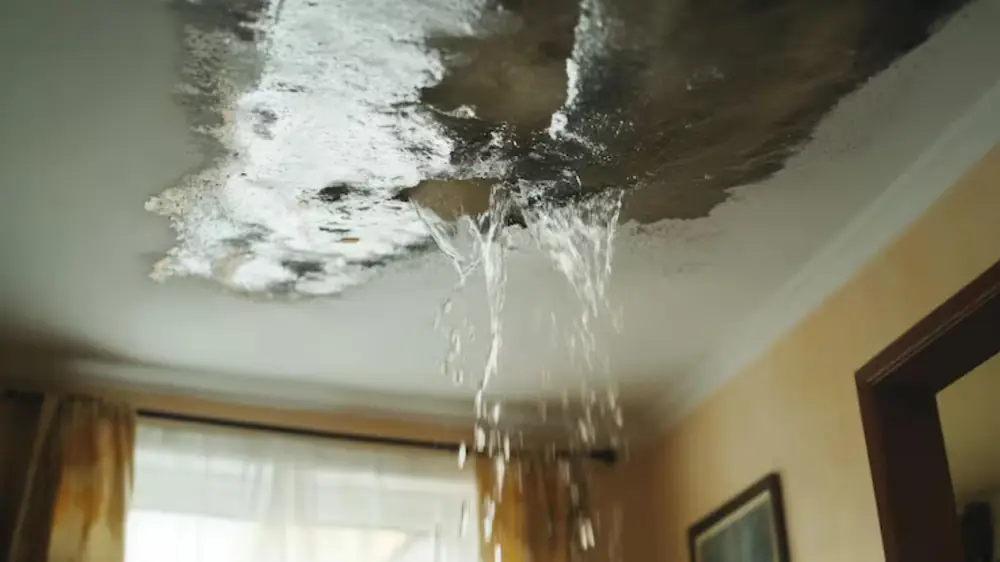
Roof and attic leaks
Roof water often enters at a penetration, such as a plumbing vent, chimney or skylight, then runs along a rafter before dropping onto insulation. By the time it stains the ceiling, a good deal of insulation may already be wet.
With a flashlight, check the underside of the roof deck for dark streaks and look for compressed insulation. Do not step between joists, because stepping on the drywall will break through it.
HVAC condensate lines
Air conditioners remove water from the air and send it out through a drain line. When the line clogs, the pan overflows and water soaks the ceiling around the unit. This one is common during hot months when the system runs for long stretches.
If the pan is full, shut off the system at the thermostat to stop making more water. Clearing the line is often a simple task for an HVAC technician, but the wet drywall and insulation still need drying.
Upstairs fixtures and pipes
In a two-story house, the ceiling below a bathroom is the first place a failed toilet seal, tub drain or supply line shows up. Slow leaks can run for weeks and may appear only when the ceiling finally saturates.
Check around the base of the toilet, under the sink and behind the washing machine. If you cannot find the source, shut off the water to the upper floor and see whether the stain stops growing.
A stop-and-act checklist
- Move people and belongings away from any bulging or sagging area.
- Place a bucket underneath and relieve a bulge with a small hole, standing to the side.
- Shut off the water supply, the HVAC system or the breaker for any wet circuit if it is safe to reach them.
- Keep out of water that touches fixtures or outlets and call the utility or 911 for any electrical risk.
- Call a restoration crew if water is active or the ceiling is wet and spreading.
When water is still coming through, the emergency water removal line is the right call. Active leaks do not wait for business hours.
What to document
- Photos and video of the stain from several angles, with a tape measure for scale
- The date and time you first noticed it and any recent weather
- The source, once found, with the failed part kept for the adjuster
- Moisture meter readings or notes from the crew
- Receipts for temporary repairs such as tarps or fans
Standing under a wet ceiling?
Call the 24/7 line now, describe the stain and whether it is dripping, and get guidance on what to shut off.
After the source is fixed
Once the source is repaired, the wet materials above and around the stain have to dry. Insulation that was soaked is usually replaced, and drywall that has lost strength comes out. Drying uses air movers and dehumidifiers and is checked with a moisture meter.
Only then does the rebuild begin, with new board, texture and paint. The water damage repair page explains that stage, and skipping the drying step is how a ceiling stains again.
Professionals sort a ceiling leak by water category and class under the ANSI/IICRC S500 standard, and that sorting decides whether the drywall can be dried in place or has to come out. A clean supply-line leak and a roof leak that crossed insulation are handled differently.
Coppell notes for ceiling leaks
Dallas/Fort Worth averages 37.01 inches of precipitation a year in the National Weather Service 1991 to 2020 normals, so roofs are tested by regular rain rather than rare events. A stain that appears after the first big storm of the season is worth tracing to the roof before the next one arrives.
Coppell's growth from 16,881 residents in 1990 to 35,958 in 2000 means many roofs and HVAC systems are on their second or third replacement cycle. Ask whoever services your system to include the condensate line and pan in the check.
Texas Department of Insurance guidance says to document damage with photos before repairs and keep damaged items until the adjuster has looked at them. Keep the failed part and a piece of the wet ceiling if the adjuster has not yet visited.
Frequently asked questions
Is a ceiling stain always from a roof leak?
No. Condensate lines, upstairs plumbing and frozen pipes cause many stains. The shape, timing and location of the stain help narrow it down.
Can I leave an old, dry stain alone?
If it is dry, firm and the source was fixed, it is mostly cosmetic. Verify with a moisture meter, since a dry-looking ceiling can still hold damp insulation above.
How do I know the ceiling is about to fall?
Sagging, a visible bulge, cracks across the board or water dripping from a seam all signal heavy saturation. Stay out from under it and call for help.
Who should I call in Coppell, TX for a ceiling leak at night?
Call the 24/7 dispatch line for active water, and an HVAC or roofing contractor for the repair of the source. Mitigation stops the spread while the source is repaired.
Will insurance cover ceiling water damage?
Most homeowner and renter policies cover sudden and accidental water damage, while gradual leaks are generally not covered, based on Texas Department of Insurance guidance. Report promptly and check your policy.
Homeowners in Irving and Grapevine call the same number for ceiling leaks.