
Ask what a water mitigation company does and most people expect a shop vacuum and a few fans. The real answer is closer to a short, documented project. In Coppell, TX the work starts with stopping the water and ends with a drying record that an insurance adjuster can read.
This walkthrough follows a typical job in the order it happens, so you can tell whether a crew is doing the work or only making noise.
Hour one: confirm the water is actually stopped
The first technician on site asks where the water came from and checks that it has been shut off. That means the main valve, the fixture stop or the appliance line, depending on the cause. A crew that starts extracting while a supply line is still running is wasting both equipment and your time.
The technician also looks at electrical exposure, walks the home to see how far the water traveled and talks with you about what you saw. Water follows gravity and framing, so the wet area is nearly always larger than the visible stain.
Moisture mapping shows the real footprint
With a pin or pinless moisture meter, the technician takes readings along walls, floors and ceilings and compares them to a dry reference reading from an unaffected part of the house. A thermal camera is sometimes used to spot cool, wet areas behind finished surfaces.
These readings are marked on a sketch of the floor plan. That map decides where equipment goes, what gets opened up and what is left alone.
Extraction comes before drying
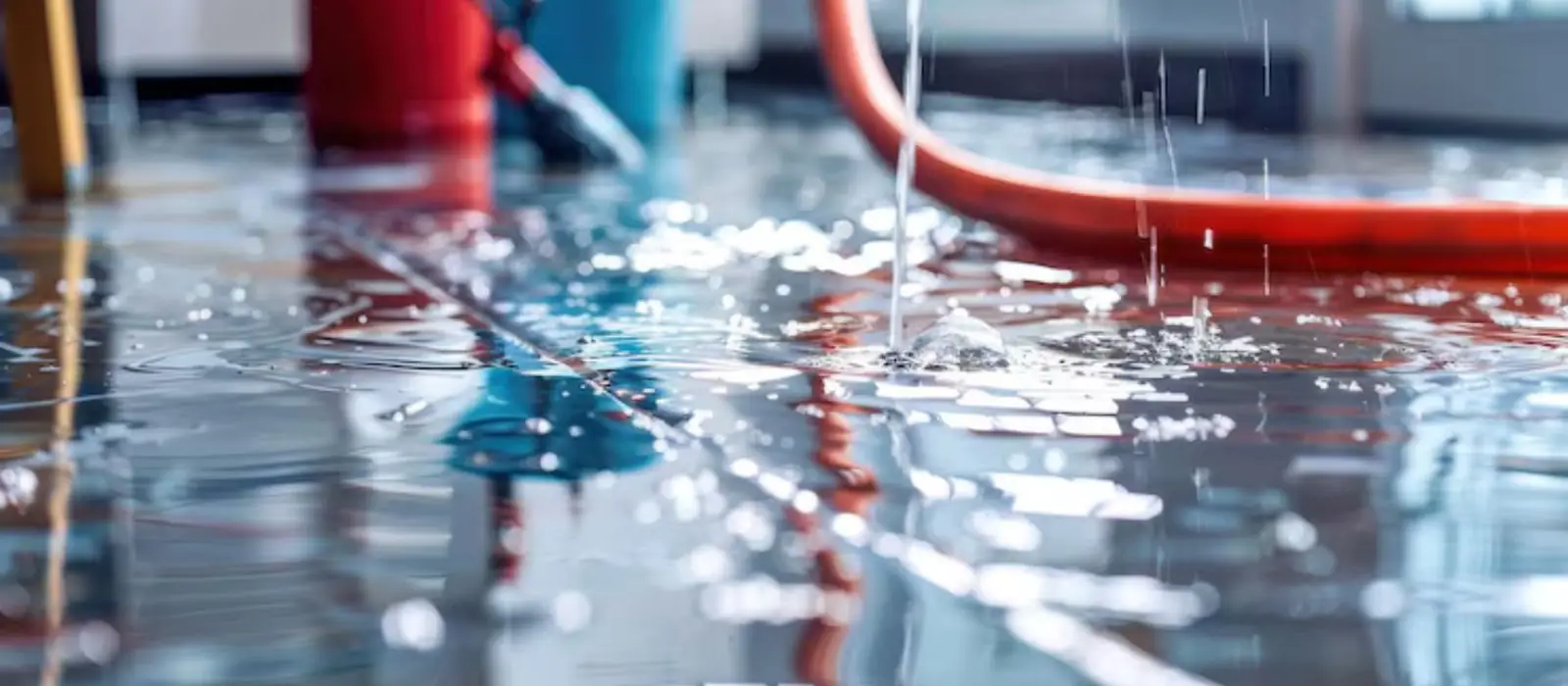
Standing water is removed with pumps or extraction units, and wet carpet and pad are extracted before anything else is decided. Every gallon pulled out mechanically is a gallon that does not have to be evaporated into the air.
On a fresh clean-water loss, carpet can sometimes be lifted and dried in place or pulled back and dried with the floor beneath it. For urgent standing-water jobs, the emergency water removal process is the same extraction work done at speed.
Removing what cannot be saved
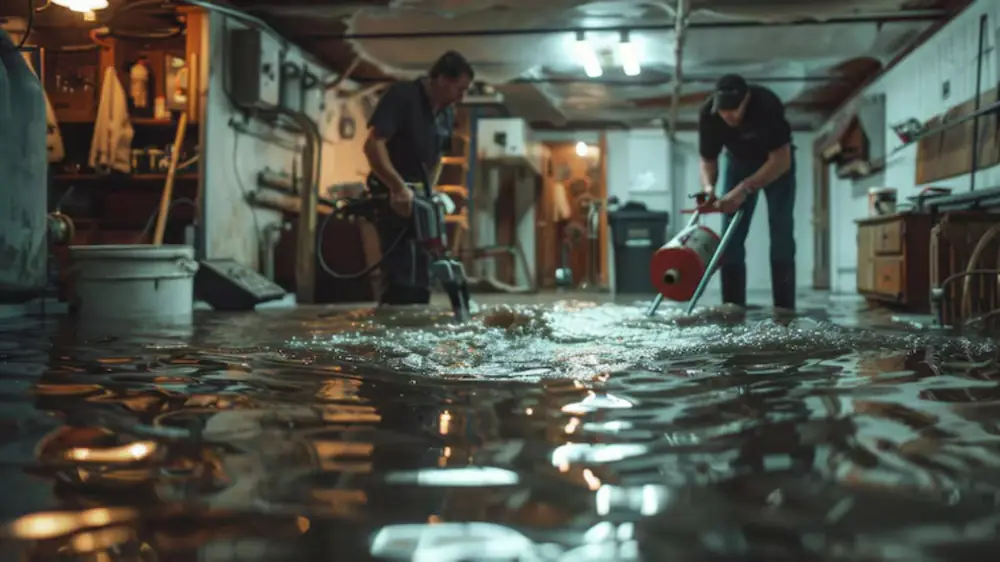
Some materials are removed on day one because they will not dry fast enough or because they hold contamination. Common examples are saturated carpet pad, swollen baseboard, wet insulation and drywall that has soaked up water from the floor.
A good crew explains each removal in terms of what the moisture reading shows and what the material is. Cutting drywall out above the visible waterline is normal. Tearing out everything is not.
| Stage | What happens | What you should see |
|---|---|---|
| Arrival | Source check, safety check, walk-through | Questions about the cause and the timing |
| Day one | Moisture mapping, extraction, material removal, equipment setup | A written scope and equipment running |
| Days two and three | Daily readings, equipment moved or added | A log of readings for each area |
| Final visit | Dry standard confirmed, equipment removed | Readings at drying goals, notes ready for the claim |
Placing the drying equipment
Air movers go along wet surfaces and into wall cavities through small ports. LGR dehumidifiers go in the same zone, and the number and size depend on the cubic footage and the class of the loss. Sealed plastic barriers keep the drying zone separate from the rest of the home so the dehumidifiers work on the right air.
Equipment is placed by calculation and by reading, not by guess. The structural drying portion of the work is the heart of the water mitigation service.
Daily readings and adjustments
Every day the technician returns, measures the same points and records the numbers. Equipment that is no longer doing useful work is shut off or moved, and equipment is added where a pocket stays wet.
You may hear the equipment running continuously, which is expected. The point of the daily visits is to stop the job on the day the numbers say it is done, not on a day picked in advance.
Documentation for the insurer
A mitigation file normally includes photos before, during and after, the moisture map, the daily readings, the equipment list and the scope of removal. Adjusters work from that paper, so a crew that keeps it makes the claim easier to review.
We never promise how a claim will be handled, and we do not name carriers. We explain what the file contains and leave coverage decisions to you and your insurer.
Where mitigation stops and cleanup and repair begin
Mitigation stops the damage from spreading and dries the structure. Cleanup deals with contamination, odor and sanitizing, and repair rebuilds what was removed. The three often overlap, which is why people mix them up.
If the water was contaminated, the water damage cleanup stage adds cleaning and sanitizing steps to the same timeline.
Want to know what your situation needs?
Call, describe the source and the rooms affected, and dispatch will explain how a crew would approach it.
What to do before the crew arrives
- Close the main water valve if the source is a supply line.
- Turn off power to wet areas only if you can reach the panel on dry ground.
- Photograph the damage before anything is moved.
- Lift small valuables and paperwork off wet floors.
- Keep children and pets out of any water that may be contaminated.
Coppell notes for mitigation jobs
The City of Coppell floodplain notice says homeowners policies do not cover rising water, so a separate flood policy is needed, and that about 40 percent of flood claims paid are for properties outside the 100-year floodplain. Before a loss, ask your agent which kind of water your policy actually covers, because that drives how the mitigation file is written.
The same notice says flood policies carry a 30-day waiting period and gives the National Flood Insurance Program line as 800-427-4661. A policy bought after the water arrives will not help with it, so check coverage during a dry month.
Coppell sits at about 512 feet of elevation, and water inside a home has little to do with the land outside it. A failed supply line on a second floor soaks a first floor just as quickly as a creek would.
Frequently asked questions
Is mitigation the same as restoration?
No. Mitigation is the emergency work that stops damage and dries the structure. Restoration is the broader term that also includes cleanup and rebuilding.
How long will the equipment run?
Most clean-water jobs run for several days, and the end point is set by moisture readings rather than a calendar. The daily log shows how close each area is to its goal.
Do I need to be home during the job?
Someone should be present for the first visit to approve the scope and show the crew the cause. After that, technicians typically return for daily readings.
Can a Coppell company start mitigation before my insurer is called?
Yes. Stopping the damage is part of your duty after a loss, and the crew documents everything so the adjuster can review it later. Call your insurer promptly as well.
Do you serve towns near Coppell?
Dispatch also reaches Irving and Lewisville with the same equipment and process.