
Ask three people in Coppell, TX what water restoration means and you may get three answers. One will say drying, another will say rebuilding, and a third will say cleanup. All three are partly right, because the word covers a whole sequence of work after water enters a building.
Understanding that sequence helps you read an estimate, talk to your insurer and decide what has to happen today versus next week.
Restoration is a sequence, not a single job
Water restoration means returning a property to its condition before the loss. Getting there takes four stages: stopping the damage, drying the structure, cleaning and sanitizing, and finally repairing or rebuilding what could not be saved.
Companies sometimes use the word restoration for only one of those stages, which is why two quotes for the same flooded room can look so different. A line that says restoration might mean the whole job or just the last part.
Stage one: mitigation stops the clock
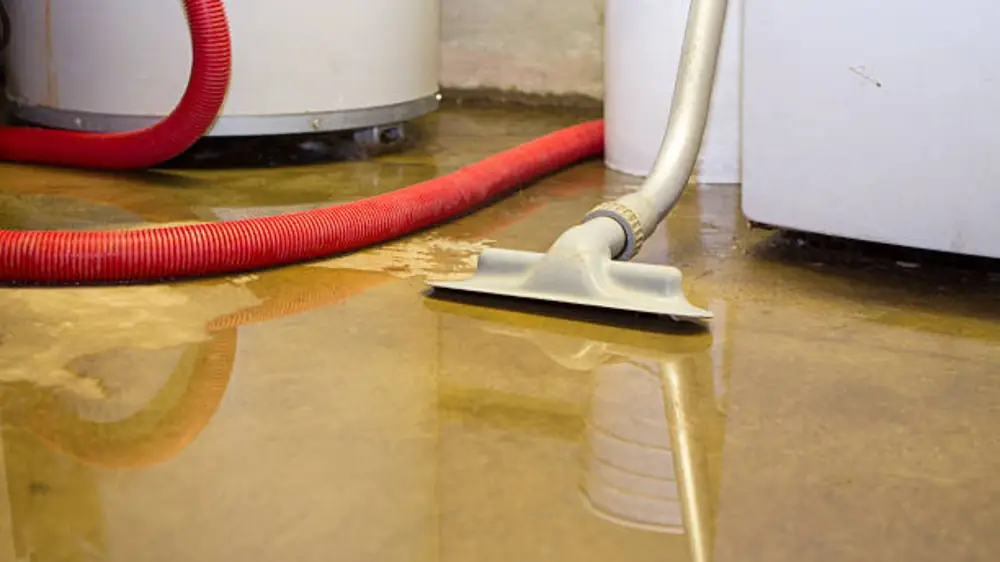
Mitigation is the first response. A crew finds the source, shuts it off if it is still running and removes standing water with pumps or truck-mounted extraction units. They also move or protect contents and set up containment if the water is contaminated.
The goal is to limit how far the damage travels. Water wicks into drywall, insulation and subfloors quickly, so mitigation is measured in hours rather than days. The full process is laid out on the water mitigation page.
Stage two: drying and monitoring
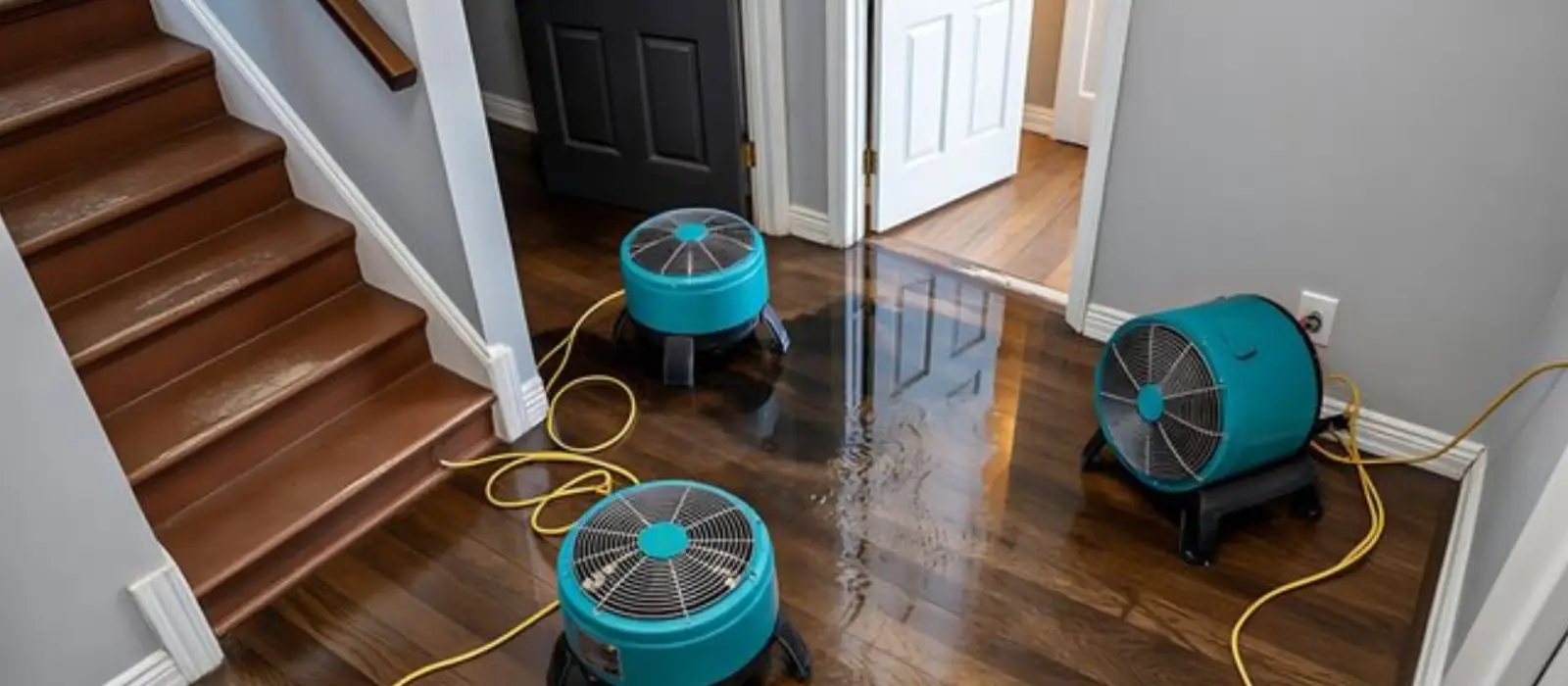
Once the standing water is gone, the building still holds moisture inside materials. Technicians place air movers and LGR dehumidifiers and take readings with moisture meters. A thermal imaging camera helps find wet areas behind finished surfaces without cutting into them.
Drying is checked daily. The crew compares readings against a dry reference from an unaffected room and adjusts the equipment until the wet materials reach that target. Equipment comes out only when the numbers say the structure is dry, not when a set number of days has passed.
Stage three: cleanup and sanitizing
Cleanup removes what cannot stay. That can mean wet carpet pad, soaked insulation, swollen baseboard or drywall that has lost its strength. Surfaces that can be saved are cleaned and treated, and any area touched by sewage or flood water gets a stricter process.
Industry practice for this work follows the published ANSI/IICRC S500 standard, which classifies water by contamination level and sets out how each category should be handled. You can ask any company whether its crews work to it.
Stage four: repair and rebuild
Repair starts only after drying is confirmed. Drywall is hung, finished and painted, flooring is replaced and cabinets or trim are reset. Skipping ahead and closing up wet walls is how hidden moisture turns into a second problem months later.
Because this stage is ordinary construction work, it is often priced separately from the first three. The water damage repair page explains what rebuild work looks like once a structure is dry.
How the same words read on an estimate
Estimates use shorthand, and the shorthand differs between companies. The table below translates the terms you are most likely to see.
| Term on paper | What it usually means | Stage |
|---|---|---|
| Extraction | Pumping or vacuuming standing water out of the structure | Mitigation |
| Demo or tear-out | Removing wet materials that cannot be dried in place | Cleanup |
| Drying equipment | Air movers, dehumidifiers and monitoring visits over several days | Drying |
| Antimicrobial | A treatment applied to cleaned surfaces after contamination | Cleanup |
| Reconstruction | Drywall, paint, flooring and trim to finish the room | Repair |
If an estimate lists only one or two of these stages, ask what happens to the others. A quote that stops after drying leaves you to arrange the rebuild yourself, which may be fine but should be a choice rather than a surprise.
Why the order matters
Each stage depends on the one before it. Dry a room before the water is removed and the equipment fights a losing battle. Rebuild before drying is confirmed and the new drywall can trap moisture against framing.
Time also matters at the front of the sequence. When pipes burst or a supply line fails at night, the emergency water removal line exists because the first hours decide how much of the later work is needed at all.
Questions to ask before work starts
- Which of the four stages does this quote cover, and which does it leave out?
- How will you show me that the structure is dry before closing walls?
- What water category do you think this is, and why?
- Who documents the loss for my insurer, and in what form?
- How is the scope and price explained to me before any work begins?
Want the stages sorted out for your situation?
Describe what happened and the dispatcher will explain which stage applies and what to do while you wait.
What this means in Coppell
Coppell grew from 3,826 residents in 1980 to 16,881 in 1990 and 35,958 in 2000, and nearly all residentially zoned land was built out by 2000. That puts most houses at roughly 25 to 45 years old, which is an inference from those dates. Original supply lines, water heaters and appliance hoses are at an age where failures become more common, so expect the source of a loss to be a worn part rather than a storm.
The 2020 Census counted 15,498 housing units in Coppell, with 70.1% owner-occupied. If you rent, the stages above are the same, but your landlord or property manager usually controls the repair stage, so report the leak in writing the same day.
Frequently asked questions
Is water restoration the same as water damage repair?
No. Repair is the final stage of restoration and covers the rebuild after the structure is dry. Restoration is the entire sequence from stopping the water to finishing the room.
How long does the full restoration sequence take?
It depends on the amount of water, the materials involved and whether contamination is present. Drying is monitored daily and ends when readings reach the dry target, and rebuild time is added after that.
Do I need every stage after a small leak?
Not always. A short leak caught early may need only extraction and a few days of drying. A moisture meter reading is the way to know.
Does a Coppell homeowner policy pay for all four stages?
Texas Department of Insurance guidance says most homeowner and renter policies cover sudden and accidental water damage, while gradual leaks are generally not covered. Ask your insurer which stages apply to your claim and check your policy language.
Which comes first in Coppell, drying or calling my insurer?
Stop the water and call a restoration crew first, then photograph the damage before anything is moved and report the claim. Mitigation limits further loss, and insurers generally expect you to take reasonable steps to prevent it.
Crews also serve neighboring cities, including Carrollton to the east and Irving to the south.