

Water mitigation is the work done in the first 48 to 72 hours after a loss to stop damage from spreading. For a Coppell, TX household, that usually means finding the source, removing standing water and starting the drying equipment before the water finishes soaking into the structure.
The term comes up on invoices and insurance letters, often without explanation. This article defines it and shows how it fits with the other kinds of work.
The plain definition
To mitigate means to reduce harm. In a flooded kitchen or a leaking attic, mitigation reduces how many square feet of drywall, insulation and flooring end up wet enough to need replacement.
It is a response measured in hours. The longer water sits against materials, the more of them it reaches, so early action often decides the size of every later bill.
What happens during mitigation
- The crew locates and stops the source, or confirms that someone has.
- Standing water is removed with submersible pumps or extraction units.
- Wet contents are moved, blocked up or taken out of the area.
- Materials that cannot be saved, such as soaked pad or ceiling board, are removed.
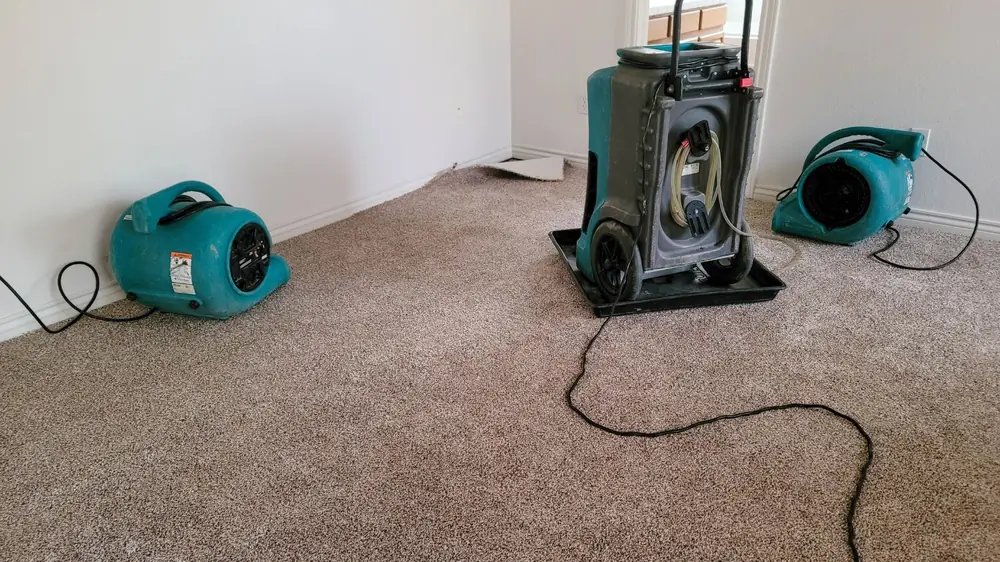
- Air movers and dehumidifiers are set and moisture readings are logged.
Each step has a reason. Extraction removes the bulk of the water quickly, while the equipment pulls out what has already soaked in. The details are on the water mitigation service page for Coppell.
The first 48 to 72 hours, hour by hour
In the first hours, the focus is shutting off water and extracting. By the end of the first day, equipment should be running and the crew should have taken baseline moisture readings in every affected room.
During days two and three, technicians return to check readings, reposition air movers and decide whether any walls need to be opened. Mitigation ends when the structure is stable and drying is under control, even though the drying itself may continue after that.
Mitigation versus restoration versus repair
These three words describe different parts of the same project. Mitigation protects what is left. Restoration is the broader goal of returning the property to its pre-loss condition. Repair is the rebuild work, such as new drywall, paint and flooring.
A shorthand that helps: mitigation is what you do on day one, restoration is the project plan, and repair is what finishes the room. The water damage repair page covers the final stage.
Why the invoice and the insurer separate them
Mitigation is urgent and has its own documentation, including equipment logs, photographs and moisture readings. Rebuild work often needs a separate scope, bids and a longer timeline.
Insurers frequently handle the two on different tracks, with emergency services reviewed first and reconstruction scoped later. Ask your adjuster how they handle each phase and keep every document the crew gives you.
What the paperwork should show
Good mitigation leaves a paper trail that makes the later conversation with an insurer easier. Ask the crew for copies as they go rather than at the end.
| Record | What it shows | Why it helps |
|---|---|---|
| Moisture readings by room | How wet each material was and how it dried | Proves the structure reached its dry target |
| Equipment log | What was placed, where and for how many days | Explains the equipment line on the invoice |
| Photographs | Conditions before, during and after removal | Supports the scope of materials removed |
| Scope of work | The rooms and materials the crew addressed | Separates urgent work from later rebuild |
Three common misunderstandings
The first is that mitigation means the problem is fixed. It means the damage has stopped growing, and a wall that is dry still needs patching and paint.
The second is that fans from a hardware store do the same job. Consumer fans move air but do not control humidity, and without a dehumidifier the moisture simply moves to another surface.
The third is that waiting a few days to see what happens is harmless. Water behind baseboards and under flooring is invisible, so by the time a stain shows, a much larger area may already be involved.
Common mitigation equipment
- Moisture meters that read water content in wood and drywall
- Thermal imaging cameras that show wet areas behind surfaces
- Air movers that push dry air across wet materials
- LGR dehumidifiers that pull moisture out of the air
- Truck-mounted extraction units for large volumes of water
What you can do before the crew arrives
Shut off the main water valve if the source is a supply line. Turn off power to wet areas only if you can reach the panel safely on dry ground, and keep everyone away from water near outlets.
Lift valuables and furniture legs off wet floors, and take photos of the damage and the source. Keep people and pets out of any water that may be contaminated.
Water spreading through the house right now?
Call the 24/7 emergency line and the dispatcher will walk you through what to do while mitigation is arranged.
Local context for Coppell mitigation
Dallas/Fort Worth averages 29 freezes per season in the National Weather Service 1991 to 2020 normals. Frozen supply lines are a regular trigger for mitigation calls in North Texas, so know where your main shutoff is before the first hard freeze of the season.
Coppell had 15,498 housing units at the 2020 Census, and most were built in the decades before 2000. Homes of that age have plumbing and appliance connections that are 25 to 45 years old, which is an inference from the city's growth dates. Replacing aging braided hoses and checking water heater drain pans are small tasks that prevent the kind of loss mitigation exists to contain.
Frequently asked questions
Is mitigation always the first step?
For an active leak or standing water, yes. The source is stopped and the water removed before anything else makes sense.
How long does mitigation last?
The emergency phase usually spans the first two to three days, while drying equipment may stay longer. The end point is set by moisture readings, not the calendar.
Can I skip mitigation and go straight to repairs?
That tends to trap moisture inside walls and floors. Texas Department of Insurance guidance notes that mold can start growing within a day after a leak, which is one reason drying comes before rebuilding.
Who handles mitigation for a home in Coppell, TX at night?
The dispatch line is staffed around the clock, every day. Call, describe the source and the affected rooms, and ask what to do while you wait.
Does insurance pay for mitigation?
Most homeowner and renter policies cover sudden and accidental water damage, according to Texas Department of Insurance guidance. Coverage depends on your policy, so ask your insurer before work starts.
Neighbors in Carrollton and Grapevine reach the same dispatch line.